
English Walnut (Juglans regia), also called European or Persian Walnut, is one of the world's classic furniture woods. Despite the name, it's native to parts of Europe and Central Asia, and it's the same tree that produces the common walnuts sold in stores.The heartwood ranges from warm honey brown to rich chocolate, often with subtle grey, olive or purple undertones. The grain is typically straight, but curly, crotch and burl figure can be spectacular, and burl veneer from this species has graced fine furniture and car dashboards for generations.Compared with American Black Walnut, it's usually lighter and warmer, with a slightly finer texture and softer contrast between heartwood and sapwood. It machines beautifully, turns well and finishes very smoothly, developing a deep luster under oil. It's not as hard as many tropical woods, but it offers an excellent balance of stability, workability and durability.It's a favorite for fine cabinetry, heirloom furniture, gun stocks, paneling, carving, boxes and inlay. For craftsmen who value elegance over brute hardness, it's hard to beat.
boxmaking, cabinetry, inlay, interior panelling, joinery, specialty items, trim
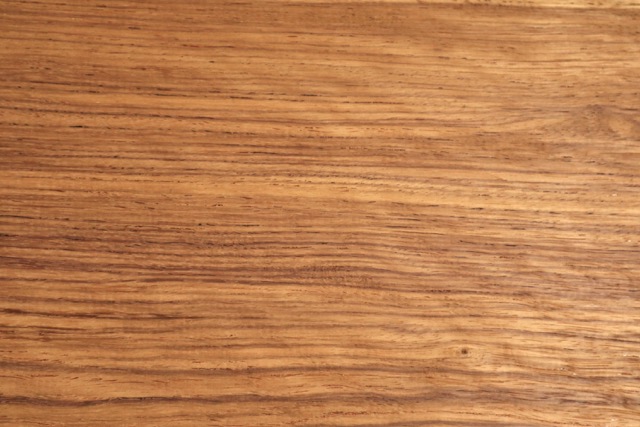
Ababa (Anthonota fragrans) is a lesser-known West African hardwood with warm, earthy tones. It's durable, naturally resistant to decay and insects, and an affordable alternative to more familiar tropical species.The heartwood carries a mix of warm browns, and the grain is interlocked with a medium to coarse texture, which gives finished pieces plenty of character. It's strong without being difficult, machining well and taking a finish beautifully. As with any interlocked wood, a sharp blade and a light final pass help keep tear-out to a minimum.Ababa suits furniture, cabinetry, boxes and interior joinery, and its natural durability makes it worth considering for some outdoor projects too. If you like the striped look of Zebrawood but want something more cost-effective, it's well worth a look.
boxmaking, cabinetry, fine furniture, furniture
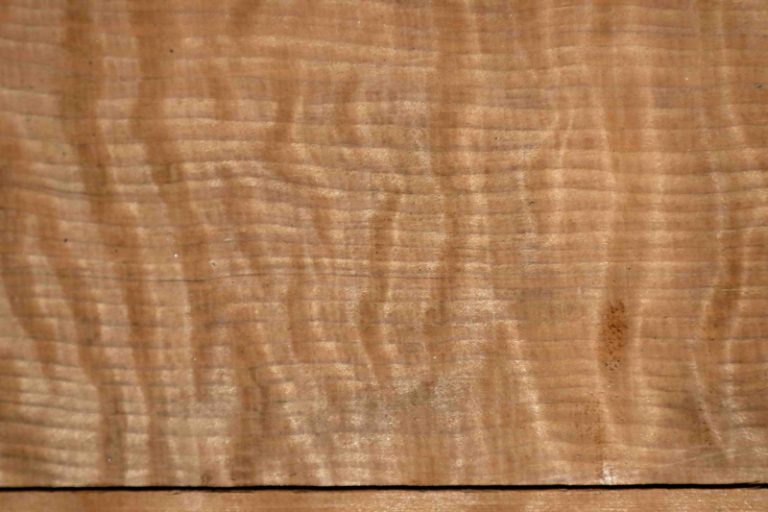
Curly Redwood (Sequoia sempervirens) is a rare, prized form of the iconic Coast Redwood, the tallest tree species on Earth, which grows along the coast of northern California and southern Oregon.Its swirling, intricate figure creates a shimmering, three-dimensional effect when properly finished, over a rich reddish-brown color. The figure comes from irregularities in the tree's growth, and much of today's curly stock is salvaged from old logs and stumps.Redwood is light and soft, so it's easy to work, but sand carefully to bring out the figure without tearing the soft grain. A clear finish makes the shimmer pop. It's naturally resistant to decay, though curly pieces are usually reserved for indoor showpieces.Curly Redwood is treasured by guitar makers for instrument tops, where it offers a warm tone and a striking look, and by woodworkers for fine furniture, cabinetry, boxes, decorative accents and specialty pieces. It's rare, and well-figured pieces are always in demand. For another figured top wood, see Quilted Maple.
cabinetry, crafting, lutherie, musical Instruments, specialty items
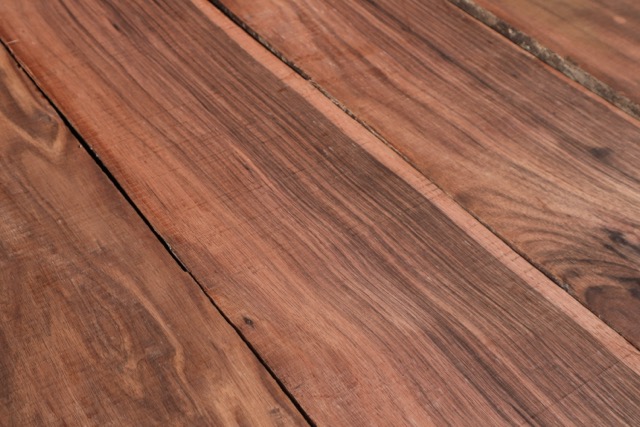
Malaysian Blackwood (Diospyros ebonasea), also called Malaysian Ebony, is a true ebony from Southeast Asia.It's prized for its dense, dark heartwood, which ranges from deep brown to black. Many boards show striking spiderweb-like patterns, so each piece is unique.Like other ebonies it's hard and dense, so use sharp tools and take your time. The reward is a smooth surface that polishes to a fine, lustrous finish and holds crisp detail.Malaysian Blackwood is used for musical instruments, fine furniture, boxes, turnings and other luxury pieces where its color and figure can stand out. If you like its look, take a look at Ziricote and Amara Ebony too.
boxmaking, cabinetry, crafting, fine furniture, lutherie, musical Instruments, specialty items, turnings
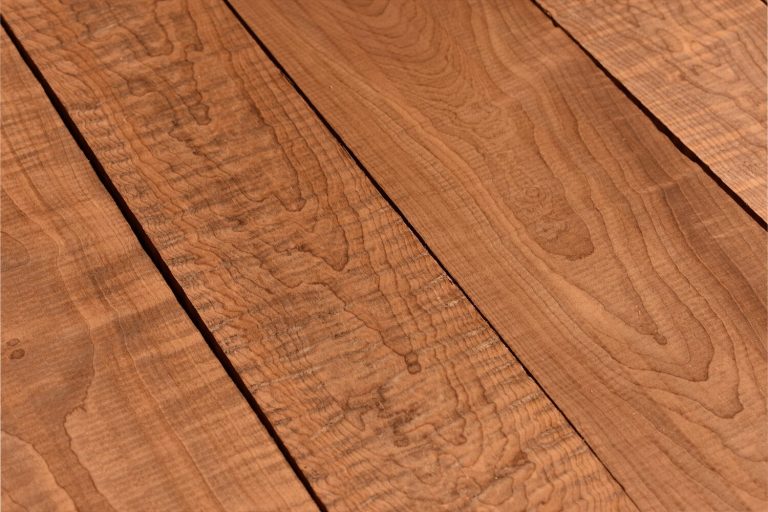
Roasted Curly Soft Maple is Curly Soft Maple that has been thermally modified. The wood is heated gradually to over 160°C in oxygen-free chambers, a natural, chemical-free process that darkens it to a rich caramel or chocolate brown while keeping the curl.The heat changes the wood's cell structure, so it absorbs less moisture. That makes it more dimensionally stable, which guitar makers value for necks. It also becomes a little more brittle, so it chips more easily than unmodified maple, and it's best for tops, panels, flooring and instrument parts rather than intricate joinery. Expect a pleasant, toasty smell when you cut it.The very dry wood soaks up finish, so plan on a generous coat. Our in-house woodworker has had excellent results with Osmo Polyx-Oil, and he suggests a thicker finish works best. Use sharp tools and light passes to avoid chipping in the figure.It's popular with guitar makers for necks and bodies, and for fine furniture, paneling and specialty pieces, where it offers the look of a dark exotic with the reliability of maple. See also Roasted Birdseye Maple.
fine furniture, flooring, interior panelling, lutherie, musical Instruments, specialty items
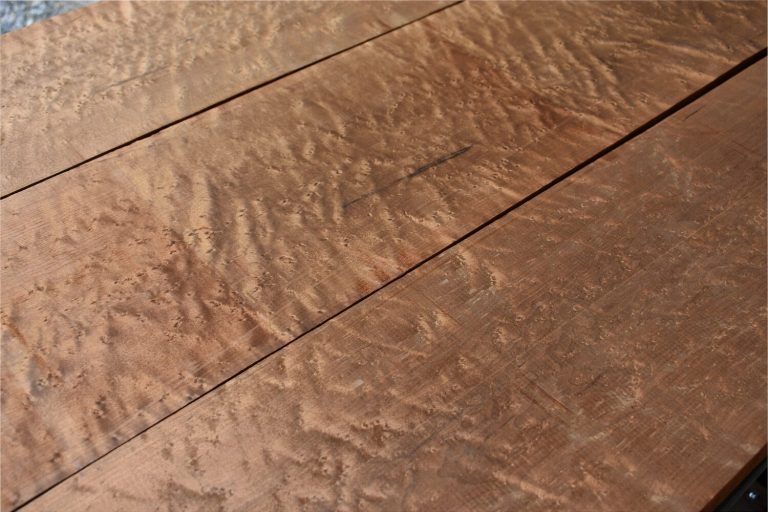
Roasted Birdseye Maple is Birdseye Maple that has been thermally modified. The wood is heated gradually to over 160°C in oxygen-free chambers, a natural, chemical-free process that darkens it to a rich caramel or chocolate brown while keeping the birdseye figure.The heat changes the wood's cell structure, so it absorbs less moisture. That makes it more dimensionally stable, which guitar makers value for necks and fretboards. It also becomes a little more brittle, so it chips more easily than unmodified maple, and it's best for tops, panels, flooring and instrument parts rather than intricate joinery. It also smells pleasantly toasty when cut.The very dry wood soaks up finish, so plan on a generous coat. Our in-house woodworker has had excellent results with Osmo Polyx-Oil, and he suggests a thicker finish works best. Use sharp tools and light passes to avoid chipping around the eyes.Roasted Birdseye Maple is popular for guitar necks and fretboards, fine furniture, knife handles, bandings and specialty pieces, where it gives the look of a dark exotic with the familiarity of maple.
bandings, crafting, fine furniture, flooring, knife handles, lutherie, musical Instruments, specialty items
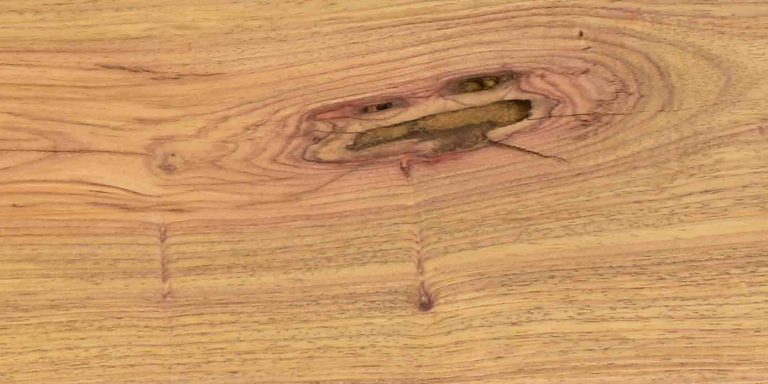
Kosso (Pterocarpus erinaceus), also sold as Senegal Rosewood in some markets, is a West African hardwood with gorgeous color and grain. It looks similar to Kiaat, another member of the Pterocarpus genus.The heartwood ranges through warm reddish-brown to deep red-purple tones, often with darker streaks and attractive figure, and it finishes to a rich luster. Like other Pterocarpus species, it's durable, stable and works well, turning and finishing nicely.Its beauty has made it heavily exploited for “Hongmu,” the traditional rosewood-style furniture popular in China, and it's now considered an endangered species. That demand has made legal supply very limited, and it's become one of the rarer woods we carry.Kosso suits boxes, cabinetry, inlay, knife handles, pens and specialty pieces where its color can shine. Our stock is limited, and we don't expect to be able to replace it once it's gone. For a similar look, see African Padauk and Kiaat.
boxmaking, cabinetry, inlay, knife handles, specialty items
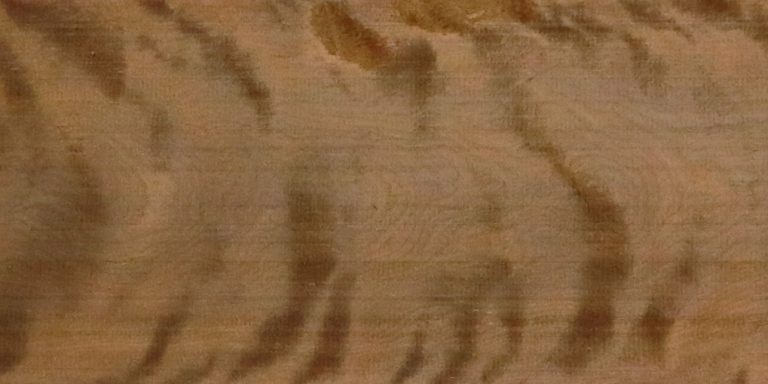
Roasted Flame Birch is flamed Yellow Birch (Betula alleghaniensis) that has been thermally modified. The wood is heated gradually to over 160°C in oxygen-free chambers, a natural, chemical-free process that changes the wood's structure and darkens it to a rich chocolate brown while keeping the flamed figure.Roasting makes the wood more dimensionally stable, but also a little more brittle, so it chips more easily than unmodified birch. That makes it a better fit for floors, tabletops, panels and cladding than for intricate joinery.Thermally modified wood is very dry and soaks up finish, so plan on a generous coat. Our in-house woodworker has had excellent results with Osmo Polyx-Oil.It's also available in wholesale quantities. See also unroasted Flame Birch.
flooring, interior panelling
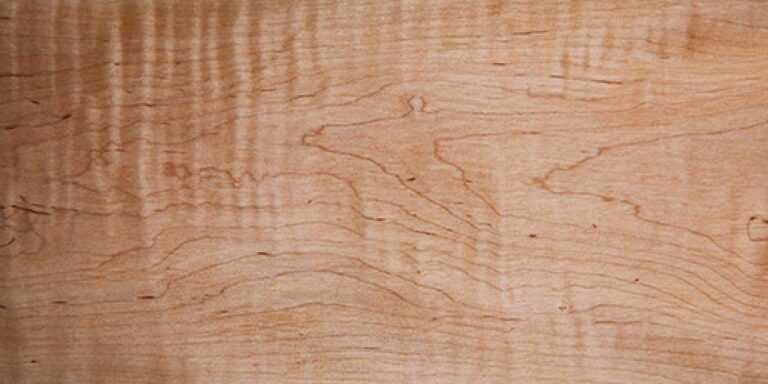
Curly Soft Maple is Red Maple (Acer rubrum) with shimmering curl figure. Red Maple is the heaviest and most common of the soft maples and grows across the eastern US and Canada, including here in Maine.The pale white to golden sapwood is the most valued part, and the figure can include tiger stripe, fiddleback and occasionally quilt. Curl is actually more common in soft maples than in hard, so there's plenty of character to choose from. Our stock generally ranges from light to medium figure.It's a little easier to work than hard maple. Take light passes to avoid tear-out in the figure, and go slowly with high-speed tools, as maple can burn. A dye or oil finish brings the curl to life.Curly Soft Maple is popular for guitar bodies and tops, furniture, boxes, turnings, specialty items and veneer, and it's a more affordable way to get the curly maple look. For a darker version, see Roasted Curly Soft Maple, and for harder stock, see Curly Hard Maple.
boxmaking, specialty items, turnings, utility lumber, veneer
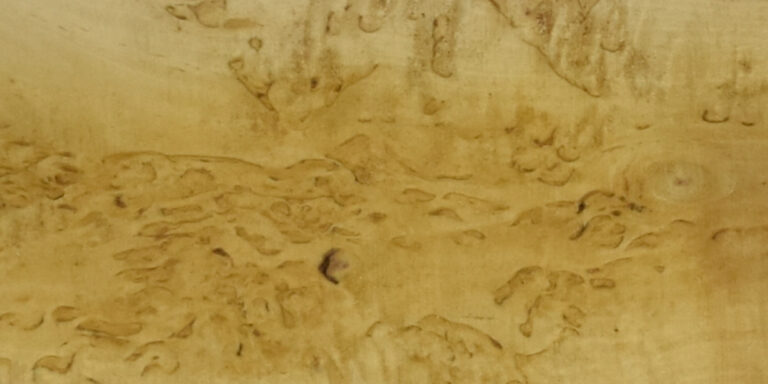
Masur Birch, also called Karelian Birch, isn't a species in its own right. It's a rare figure found in some European birch (Betula pendula) that produces a marbled look somewhere between burl and birdseye.The cause of the figure isn't fully settled. Some point to insect larvae damaging the growing tree, while others believe it's hereditary, and the variety is often named Betula pendula var. carelica. Whatever the cause, the result is striking lumber, and no two pieces are alike.The wood is light brown and works much like other birch, finishing to a smooth surface that shows off the figure.Masur Birch is mostly used for accents, turnings, knife handles and other small specialty pieces. Veneer is rotary-cut, like Birdseye Maple, to show the figure at its best.
fine furniture, knife handles, specialty items, turnings, veneer
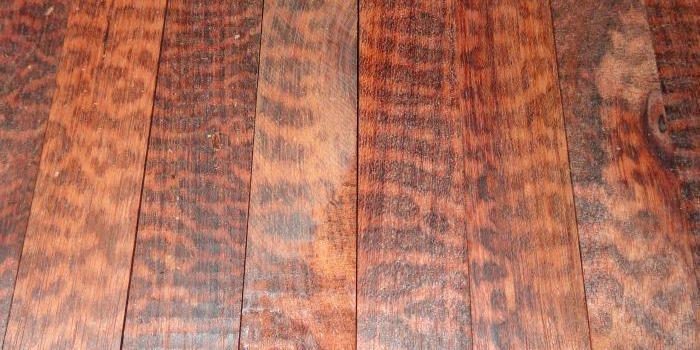
Snakewood (Brosimum guianense) is one of the rarest and most distinctive woods in the world. Its pale yellow, orange-brown or reddish-brown background is covered in dark markings that look remarkably like snakeskin.The grain is usually straight and the texture exceptionally fine, giving finished pieces a remarkable luster. It's a close relative of Bloodwood.It's extremely dense and hard, and it can be brittle, splintering or cracking during machining, so razor-sharp tools and patience are essential. It turns beautifully and polishes to an extraordinary finish.The trees have slender trunks and yield little clear wood, so Snakewood is mostly sold as small billets, turning blanks, scales and pen and bow blanks. It's one of the most expensive woods per board foot, and a favorite for knife and gun handles, inlay, luxury pens, instrument parts and violin bows.
fine furniture, specialty items, turnings
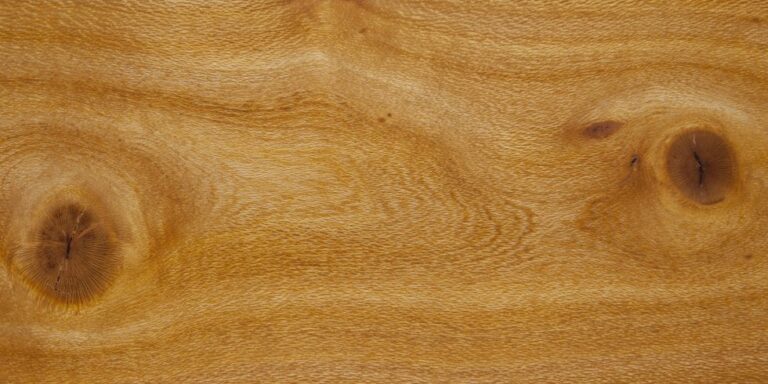
Silky Oak (Cardwellia sublimis) is an Australian hardwood from the rainforests of northern Queensland. It isn't a true oak but a member of the protea family, though it shares the look, with large rays and flecked figure that can be very dramatic on quartersawn faces.It's light to medium reddish-brown, with slightly darker rays ranging from muted brown to grey, and a silky sheen that gives it its name. It's easily mistaken for Lacewood, which looks and weighs much the same.Its coarse texture and flecks can make planing tricky, but otherwise it's easy to work, and it glues and finishes well. It's more durable than American oaks, and a clear finish makes the flecks shimmer.Supply to the US is sporadic, so it isn't widely known here. In Australia it has a long history in fine furniture and cabinetry. It's used for furniture, cabinetry, boxes, turnings, guitar backs and veneer. For a similar flecked look, see Leopardwood.
cabinetry, fine furniture, specialty items, turnings, veneer
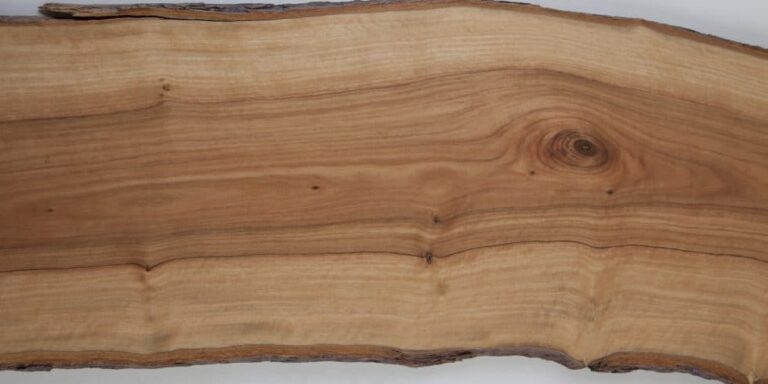
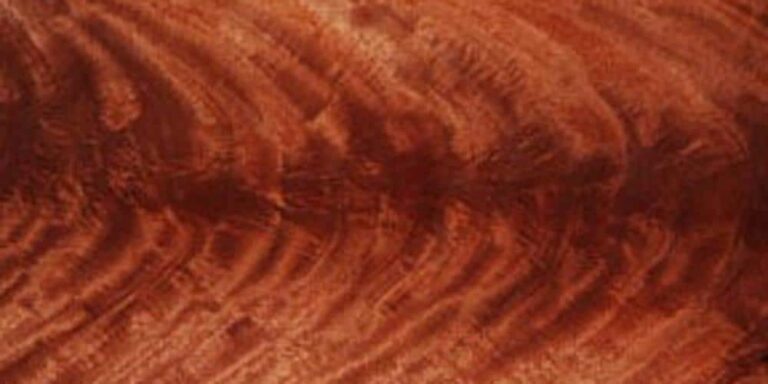
Crotch Mahogany (Swietenia macrophylla) is Genuine Mahogany cut from where the trunk divides into major branches, producing dramatic feather and flame figure that has been prized by furniture makers for centuries.Genuine Mahogany is the world's most sought-after mahogany and the standard others are measured against. Its color ranges from light golden brown to pale pinkish-red, darkening over time to a rich, warm red-brown.Premium pieces have a velvety look, tight, consistent grain and chatoyance from subtle to dramatic. It's very cooperative to work and finish, which also makes it popular with turners and carvers. Crotch grain changes direction a lot, so take light passes and sand carefully to avoid tear-out. Every piece is different, so we recommend choosing by eye.Crotch Mahogany is a showpiece wood for fine furniture, cabinet doors, panels, box lids and veneer, where its figure can be book-matched to dramatic effect. See also Genuine Mahogany lumber.
fine furniture
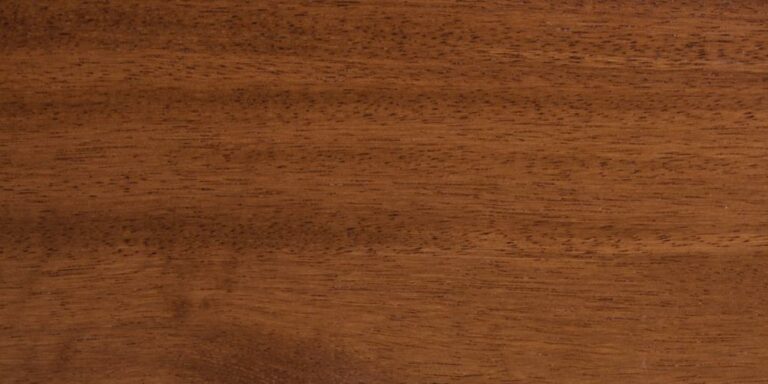
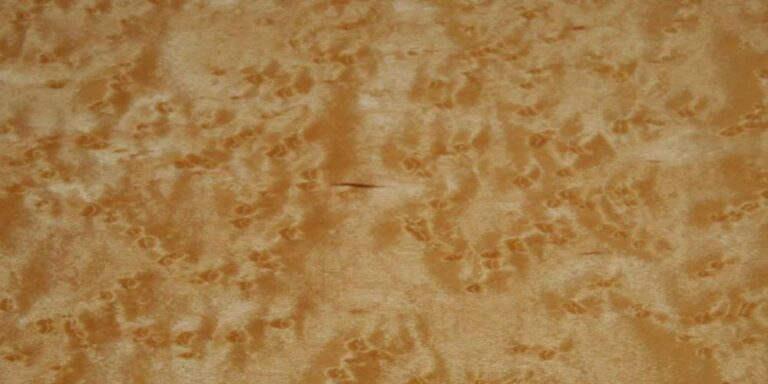
Birdseye Maple isn't a species. It's a figure found mostly in Sugar Maple (Acer saccharum), and much of ours comes from Maine. It remains one of the most coveted figured maples and is rare: only a small fraction of maple trees develop it.The cause isn't proven, but the usual explanation is that tough growing conditions make the tree sprout tiny buds that never develop, leaving small “eyes” in the wood. Eye size and density vary a lot, and boards with more eyes command higher prices. Larger eyes can look almost three-dimensional once finished, like small brown bumps on a golden surface.It works like other hard maple, but occasionally an eye can tear out and leave a small void, so take light passes and sharp blades. Some guitar makers avoid it for fretboards for this reason, or seal it with lacquer. An oil finish makes the eyes pop.It's prized for fine furniture, cabinetry, guitar necks and bodies, boxes, interior trim and veneer, and it was a favorite of Art Deco designers. For a darker version, see Roasted Birdseye Maple.
cabinetry, furniture, lutherie, specialty items, veneer
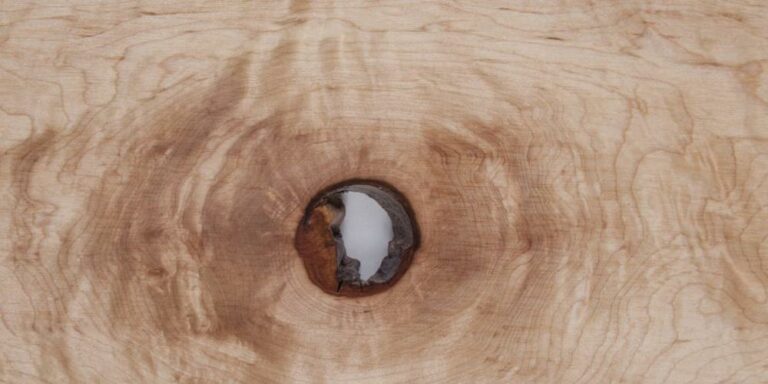
Curly Hard Maple, or Tiger Maple, is Sugar Maple (Acer saccharum) with bold “tiger stripe” figure, also known as fiddleback when it's tight and even. Curl is more common in soft maples, but it appears in hard maple too, and that's what we stock.As with all maple, the pale sapwood is the most valued part. Dense, pure-sapwood boards with strong figure are the most sought-after and command serious prices with electric guitar makers. The tight curl on quartersawn boards is especially striking, with stripes that seem to move as you tilt the board.It works like any hard maple: take light passes to avoid tear-out in the figure, and go slowly with high-speed tools, as maple can burn. A dye or oil finish makes the curl pop dramatically, which is why it's so popular for guitar tops.Curly Hard Maple is a favorite for fine furniture, Shaker and colonial reproductions, boxes, flooring, cabinetry, gun stocks and veneer, as well as violin backs and guitar necks. See also Curly Soft Maple.
boxmaking, fine furniture, veneer
Soft Maple isn't a single species. It's the name for the lighter maples, and ours is Red Maple (Acer rubrum), the heaviest and most common of them, found across the eastern US and Canada. Like all our maples, it's a Maine local.As with all maples, the pale white to golden sapwood is valued more than the darker heartwood. The grain is usually straight with a fine, even texture, and it's only slightly softer than Hard Maple, so it's hard enough for most furniture.It's a little easier to work than Hard Maple, and it machines, turns, glues and finishes well. Go slowly with high-speed tools, as maple can burn, and test stains first, as it can blotch. Figure can be dramatic, from tiger stripe and fiddleback to the occasional quilt.Its extra weight makes Red Maple the most useful of the soft maples for furniture and utility work. Soft Maple is a versatile, affordable choice for cabinetry, painted furniture, boxes, turnings, millwork and veneer. For figured stock, see Curly Soft Maple.
boxmaking, specialty items, turnings, utility lumber, veneer
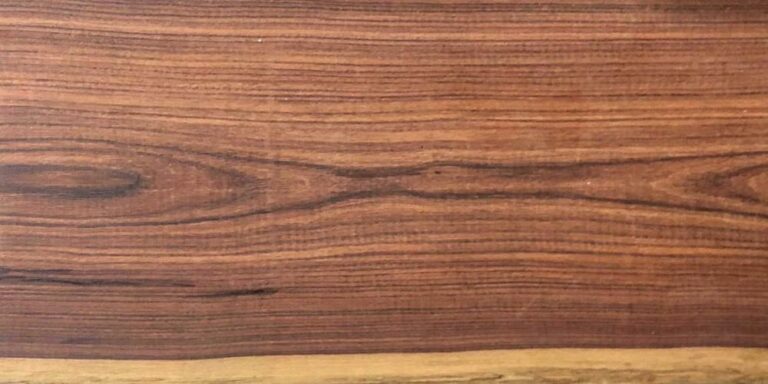
Kingwood (Dalbergia cearensis), also called Brazilian Kingwood or Violetwood, is one of the densest rosewoods and one of the most colorful. It grows in northeastern Brazil and has been prized by European furniture makers since the 17th century, when it was a favorite for royal cabinetry and marquetry.The reddish-brown heartwood is streaked with dark violet to black, and the pale yellow sapwood often adds dramatic contrast. The grain is usually straight, sometimes wavy or interlocked, with a fine, even texture and natural luster.Logs tend to check and crack, so clean, defect-free boards are rare, especially in larger sizes. It's very rot- and insect-resistant, and its oils can make gluing tricky, so wipe joints with a solvent first. It's also hard on tools, but it turns beautifully and polishes to a glassy finish.Kingwood is a favorite for fine inlay, banding, custom knife handles, pens and turnings, and it's also used for gun stocks, small boxes and veneer. For a softer-colored rosewood, see Tulipwood.
gun stocks, handles, inlay, specialty items, turnings, veneer
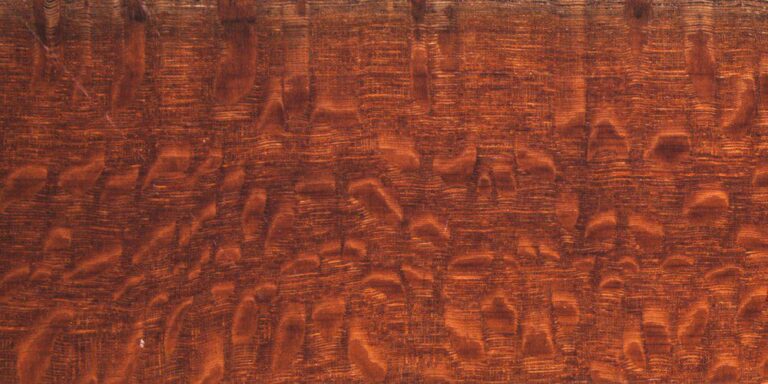
Leopardwood (Roupala brasiliensis), also called Brazilian Lacewood, is a South American hardwood named for the tightly grouped flecks that cover its surface.It's almost always quartersawn to show off this leopard-spot figure, which comes from the wood's large rays. It's medium to dark reddish-brown, and before sanding, the raised flecks give the surface a real three-dimensional look. Its color deepens with age, and a clear finish makes the flecks stand out.It's fairly hard to work, and its uneven texture can tear out when planed, so take light passes with sharp blades or use a drum sander for final surfacing. It glues and finishes well once surfaced, and it turns nicely.Leopardwood is often confused with Lacewood, which has a similar pattern but is much lighter and less dense. Its striking figure makes it a favorite for fine furniture, cabinetry, boxes, guitar backs, turnings and veneer, where a little goes a long way as an accent. For a similar flecked look, see Silky Oak.
cabinetry, fine furniture, turnings, veneer
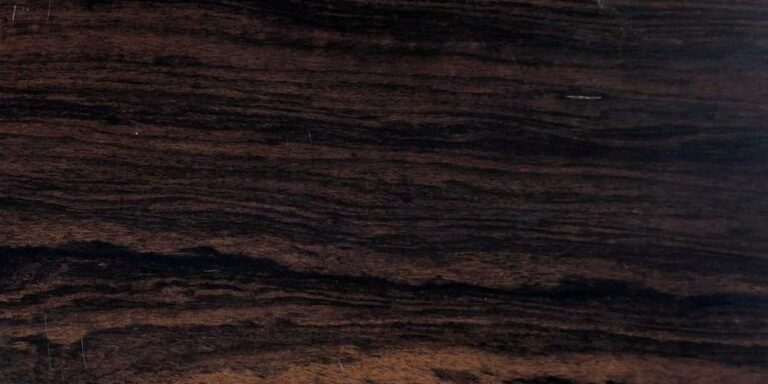
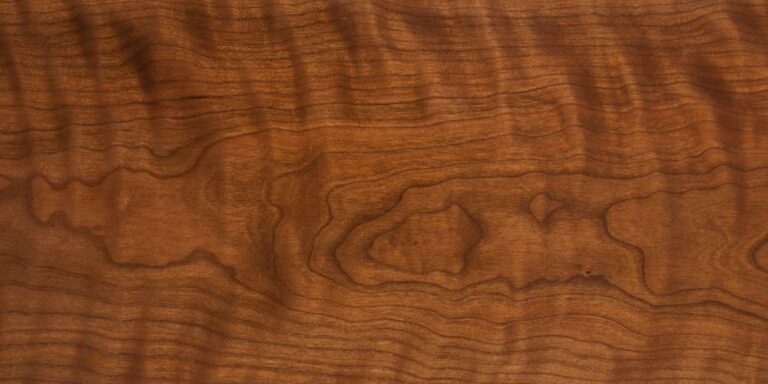
Curly Black Cherry (Prunus serotina) is the figured version of American Cherry, with bold, shimmering curl running across the grain. The best boards are quite dramatic, with the stripes appearing to move as you tilt the piece in the light.Freshly cut, it's tan to light brown with a pink or red tint, and it ages to a rich reddish-brown that deepens over the years. The grain is straight to irregular, the texture fine, and the density moderate.It's one of the most cooperative hardwoods to work, and it's strong for its weight, stable and durable. Take light passes with a sharp blade to avoid tear-out in the figure, and finish with an oil or clear finish to make the curl glow. It can blotch if stained, but the natural color and figure are the reason to buy it.Curly Cherry is the most sought-after form of this classic American wood, ideal for fine furniture, cabinetry, boxes, drawer fronts and instrument parts where the figure can show. Its stability has also earned it a place in guitar necks and bodies. See also plain Black Cherry.
cabinetry, fine furniture, flooring, millwork, specialty items, turnings, veneer
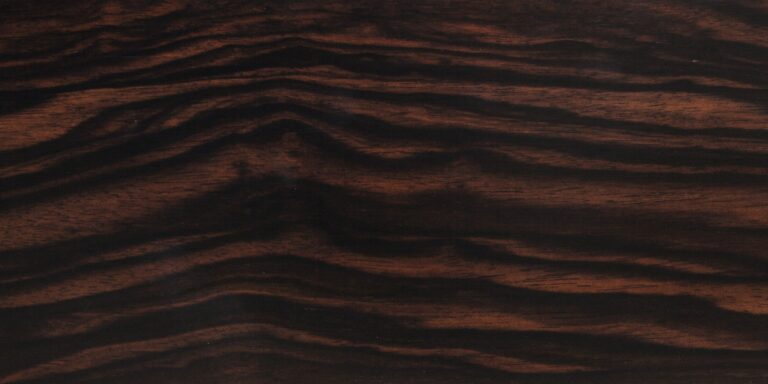
Macassar Ebony (Diospyros celebica) comes from the Indonesian island of Sulawesi and is one of Southeast Asia's best-known exotics. It's one of our favorites, with a classic striped look that has been prized for luxury furniture since the Art Deco era.Deep brown dominates, with stripes that can include green, yellow, burgundy, red, orange and even peach in the best pieces. Stripes are usually broad and bold, often twisting and overlapping, and boards with fine, tight, even striping are rarer and more desirable. The sapwood ranges from dull tan to light golden brown.Like other dense woods, it can be hard to work and hard on blades, and it's prone to checking, so store it carefully. It rewards the effort with a superb finish, polishing to a deep, glassy luster.Macassar Ebony is in constant demand for veneer and is prized by guitar makers for backs, sides and fretboards, where its density gives a bright, clear tone. It's also used for cabinetry, pool cues, turnings, boxes and inlay. See also Amara Ebony.
cabinetry, crafting, pool cues, specialty items, turnings, veneer
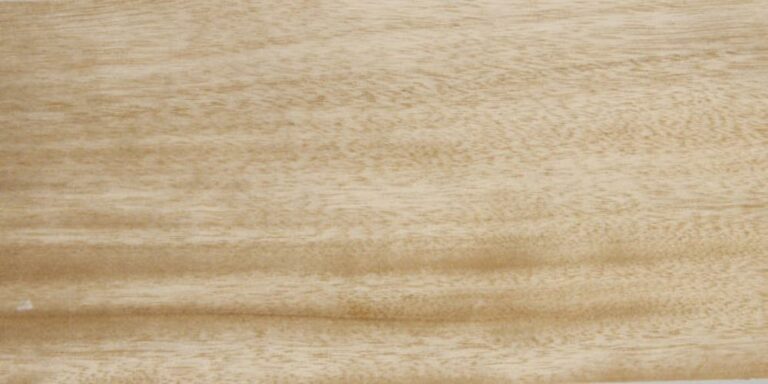
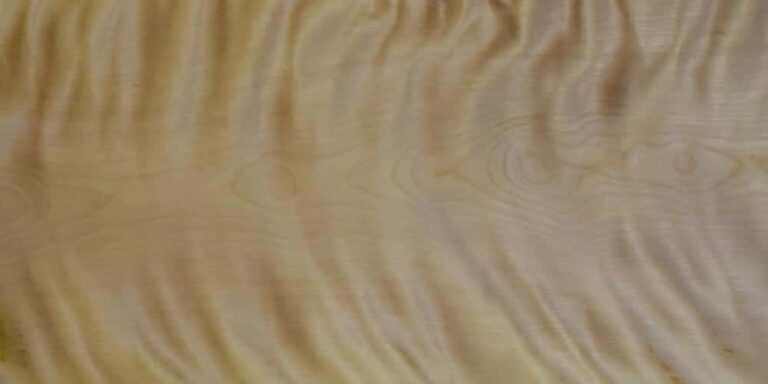
Flame Birch isn't a separate species. It's Yellow Birch (Betula alleghaniensis) with a bold, wavy flamed figure running across the grain.The heartwood ranges from pale yellow to a light reddish-brown, with grayish-white sapwood. The best boards show wide, dramatic curl, similar to figured Cherry, that shimmers under a clear finish.It works easily and turns, glues and finishes well, though most boards have little natural luster until finished. It isn't durable outdoors, so keep it protected.Flame Birch is a favorite for boxes, turnings, crafts and specialty pieces where the figure can take center stage, and the best logs go to veneer. For a darker, more stable version, see Roasted Flame Birch.
boxmaking, crafting, specialty items, turnings, veneer