
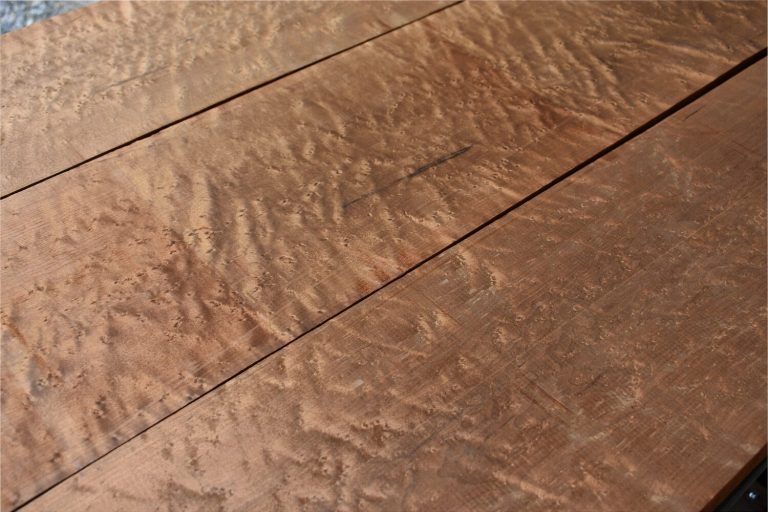
Roasted Birdseye Maple is Birdseye Maple that has been thermally modified. The wood is heated gradually to over 160°C in oxygen-free chambers, a natural, chemical-free process that darkens it to a rich caramel or chocolate brown while keeping the birdseye figure.The heat changes the wood's cell structure, so it absorbs less moisture. That makes it more dimensionally stable, which guitar makers value for necks and fretboards. It also becomes a little more brittle, so it chips more easily than unmodified maple, and it's best for tops, panels, flooring and instrument parts rather than intricate joinery. It also smells pleasantly toasty when cut.The very dry wood soaks up finish, so plan on a generous coat. Our in-house woodworker has had excellent results with Osmo Polyx-Oil, and he suggests a thicker finish works best. Use sharp tools and light passes to avoid chipping around the eyes.Roasted Birdseye Maple is popular for guitar necks and fretboards, fine furniture, knife handles, bandings and specialty pieces, where it gives the look of a dark exotic with the familiarity of maple.
bandings, crafting, fine furniture, flooring, knife handles, lutherie, musical Instruments, specialty items
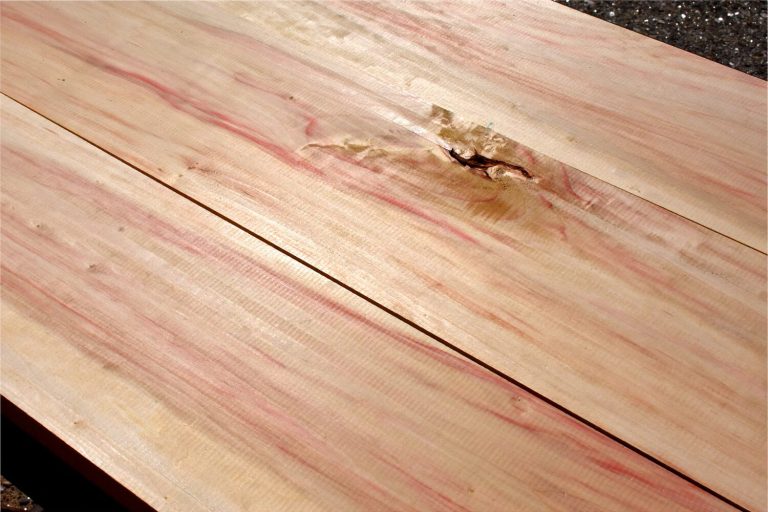
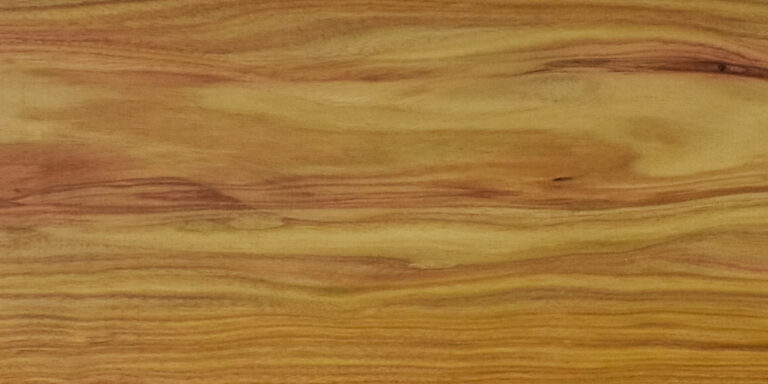
Canarywood (Centrolobium spp.), also called Canary or Yellow Tarara, grows across South America, from Panama to southern Brazil. It's best known for its lively mix of colors, which makes every board a little different.The heartwood ranges from pale yellow through pink and orange to dark reddish-brown, and the best boards show the whole range in a single piece, often with darker streaks. More evenly colored boards can look a lot like Cherry. The colors deepen and mellow over time toward a warmer reddish-brown.It's durable and fairly hard, yet still easy to work. The grain is usually straight, sometimes interlocked, with a medium texture, and it turns, glues and finishes well, taking a high polish. That means you get a colorful South American hardwood without the usual struggle, and at a reasonable price.Canarywood is a great choice for boxes, turnings, inlay, bandings, furniture accents and veneer, and the right board makes a good, lower-priced alternative to Tulipwood. Not to be confused with Red Canarywood, which is a different wood from another genus.
bandings, boxmaking, inlay, specialty items, turnings, veneer
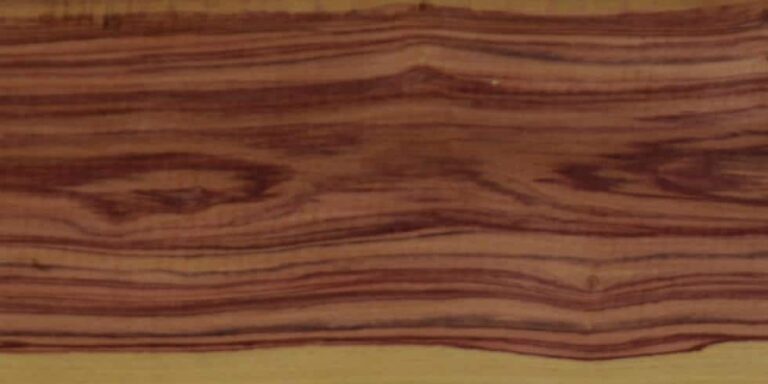
Tulipwood (Dalbergia decipularis), also called Brazilian Tulipwood or Pinkwood, is one of the most coveted and seldom-seen rosewoods. It grows in northeastern Brazil and is unrelated to Tulip Poplar, which is sometimes sold under the same name.The heartwood is cream to salmon, striped with reds, violets, purples, pinks and rose, and the sapwood is pale yellow. It has a mild, sweet scent when cut. The color slowly fades with exposure to light, so a UV-resistant finish helps preserve it.The grain is mostly straight, sometimes wavy or irregular. It's dense and oily, which makes it challenging to work and glue, so keep tools sharp and wipe joints with a solvent first. Despite its open grain, it sands very smooth and polishes to a pleasing luster.The trees are small, so long, wide boards are rare and command a premium, and most Tulipwood comes in craft-sized pieces. It's been a favorite for fine furniture inlay and banding for centuries, and it's used for boxes, turnings, pool cues, bows and instrument parts. For a lower-priced alternative, see Canarywood.
bandings, bows, boxmaking, inlay, musical Instruments, pool cues, specialty items, turnings, veneer