
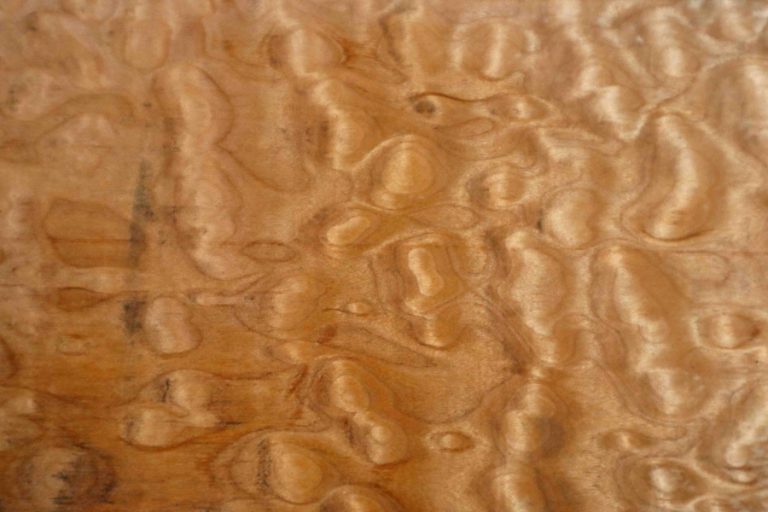
Quilted Maple comes from Bigleaf Maple (Acer macrophyllum), which grows along the Pacific coast from British Columbia to California. It's prized for its rippling, three-dimensional figure, which looks like quilted fabric or rippling water.The figure comes from irregularities in the tree's growth, and it gives the wood real depth and shimmer, especially under finish. Color varies from pale cream to light tan, sometimes with warmer tints. Only a small share of Bigleaf Maple shows strong quilt, which is why good boards command a premium.It's a little softer than Hard Maple and works much like other maples. Take light passes to avoid tear-out in the figure, and sand carefully. A dye or clear finish brings out the shimmer dramatically, which is why it's so popular for guitar tops.Quilted Maple is a favorite with luthiers for electric guitar tops and acoustic backs, and it's also used for fine furniture, boxes, knife handles, paneling and decorative veneer. For a different maple figure, see Birdseye Maple and Curly Maple.
boxmaking, cabinetry, furniture, interior panelling, knife handles, lutherie, musical Instruments
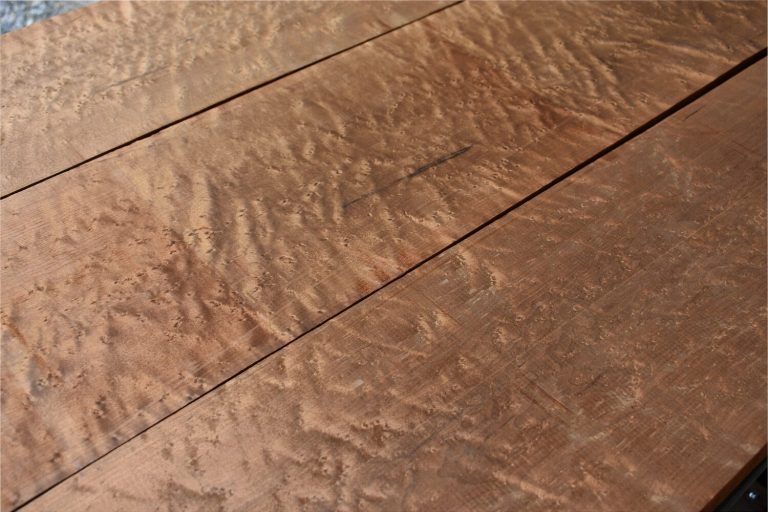
Roasted Birdseye Maple is Birdseye Maple that has been thermally modified. The wood is heated gradually to over 160°C in oxygen-free chambers, a natural, chemical-free process that darkens it to a rich caramel or chocolate brown while keeping the birdseye figure.The heat changes the wood's cell structure, so it absorbs less moisture. That makes it more dimensionally stable, which guitar makers value for necks and fretboards. It also becomes a little more brittle, so it chips more easily than unmodified maple, and it's best for tops, panels, flooring and instrument parts rather than intricate joinery. It also smells pleasantly toasty when cut.The very dry wood soaks up finish, so plan on a generous coat. Our in-house woodworker has had excellent results with Osmo Polyx-Oil, and he suggests a thicker finish works best. Use sharp tools and light passes to avoid chipping around the eyes.Roasted Birdseye Maple is popular for guitar necks and fretboards, fine furniture, knife handles, bandings and specialty pieces, where it gives the look of a dark exotic with the familiarity of maple.
bandings, crafting, fine furniture, flooring, knife handles, lutherie, musical Instruments, specialty items
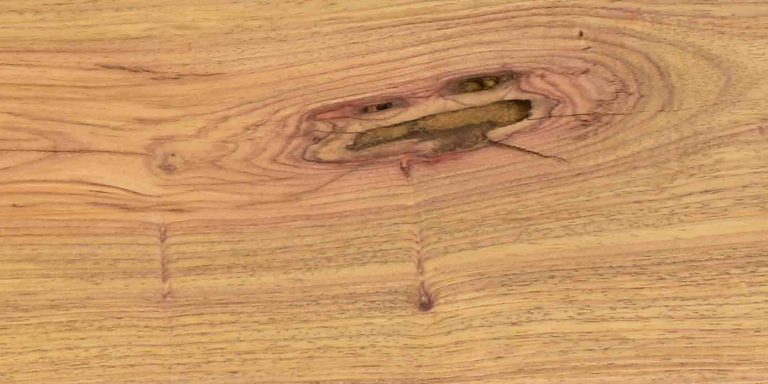
Kosso (Pterocarpus erinaceus), also sold as Senegal Rosewood in some markets, is a West African hardwood with gorgeous color and grain. It looks similar to Kiaat, another member of the Pterocarpus genus.The heartwood ranges through warm reddish-brown to deep red-purple tones, often with darker streaks and attractive figure, and it finishes to a rich luster. Like other Pterocarpus species, it's durable, stable and works well, turning and finishing nicely.Its beauty has made it heavily exploited for “Hongmu,” the traditional rosewood-style furniture popular in China, and it's now considered an endangered species. That demand has made legal supply very limited, and it's become one of the rarer woods we carry.Kosso suits boxes, cabinetry, inlay, knife handles, pens and specialty pieces where its color can shine. Our stock is limited, and we don't expect to be able to replace it once it's gone. For a similar look, see African Padauk and Kiaat.
boxmaking, cabinetry, inlay, knife handles, specialty items
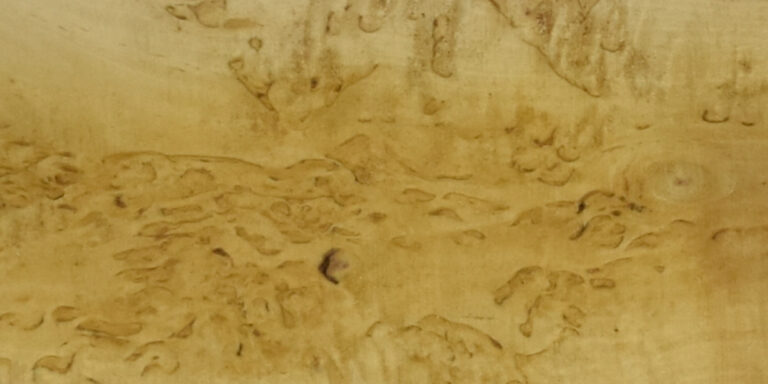
Masur Birch, also called Karelian Birch, isn't a species in its own right. It's a rare figure found in some European birch (Betula pendula) that produces a marbled look somewhere between burl and birdseye.The cause of the figure isn't fully settled. Some point to insect larvae damaging the growing tree, while others believe it's hereditary, and the variety is often named Betula pendula var. carelica. Whatever the cause, the result is striking lumber, and no two pieces are alike.The wood is light brown and works much like other birch, finishing to a smooth surface that shows off the figure.Masur Birch is mostly used for accents, turnings, knife handles and other small specialty pieces. Veneer is rotary-cut, like Birdseye Maple, to show the figure at its best.
fine furniture, knife handles, specialty items, turnings, veneer
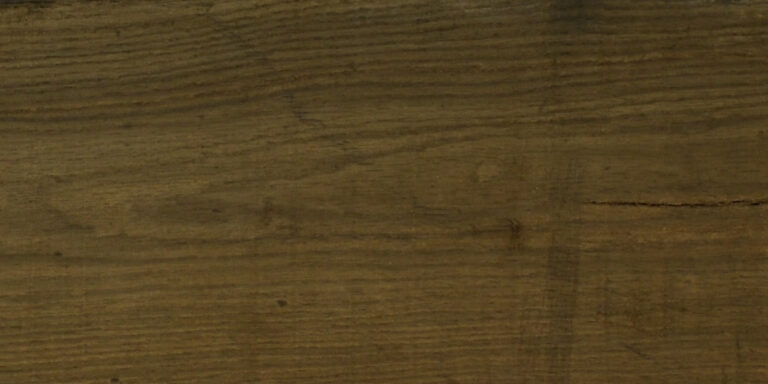
Bog Oak is English Oak (Quercus robur) that has been preserved for centuries, often thousands of years, in a peat bog. Ancient trees fell into the wet ground and were sealed away from the air, then recovered when bogs are drained or dug.Starved of oxygen, the wood doesn't rot. Instead, minerals in the acidic peat react with the tannins in the oak and slowly turn it dark brown to almost black. Some pieces have been radiocarbon-dated to several thousand years old, and every piece has its own history and character.It works much like other oak once dry, though it can be more brittle, so take light passes and handle it with care. Drying must be slow and careful, which is part of why it's so rare. It finishes to a deep, rich luster that no stain can match.Bog Oak is a rare, special wood for boxes, knife handles, jewelry, inlay, pens and small furniture pieces, and it makes a remarkable talking point. See also Slavonian Oak, the same species in its fresh form.
boxmaking, furniture, knife handles
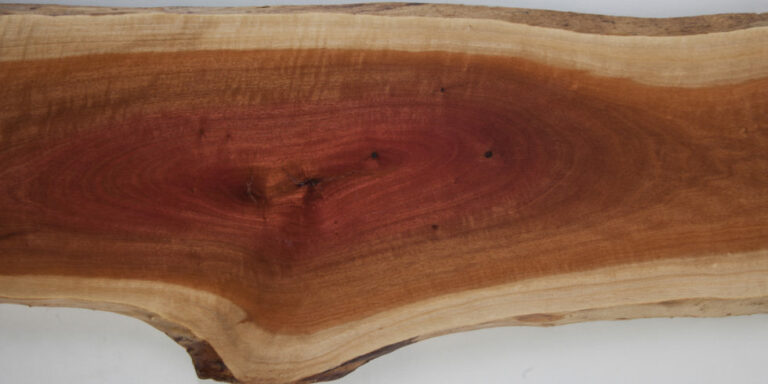
Pink Ivory (Berchemia zeyheri), also known as Red Ivory, is one of the rarest and most sought-after woods in the world. It's native to southern Africa, where it's traditionally associated with Zulu royalty, and many guitar makers see it as a “holy grail” tonewood.It's prized for its dazzling pink to red color, which ranges from pale pink to deep red, and occasional striking figure such as curl or chatoyant stripes. The texture is fine and even, with a lovely natural luster.It's very hard and dense, popular with carvers and turners, but it can be difficult to work and dulls blades. It turns beautifully and polishes to a glassy finish, and a finish with UV protection helps preserve its color. The trees are small, rarely much over 35 feet tall with trunks around a foot across, and harvesting in South Africa is limited by permit.As a result, Pink Ivory is mostly available in small, craft-sized pieces. It's used for turnings, knife handles, chess pieces, pool cues, pens, inlay and instrument parts. For another bright red wood, see Bloodwood.
chess pieces, inlay, knife handles, musical Instruments, pool cues, specialty items, turnings, veneer
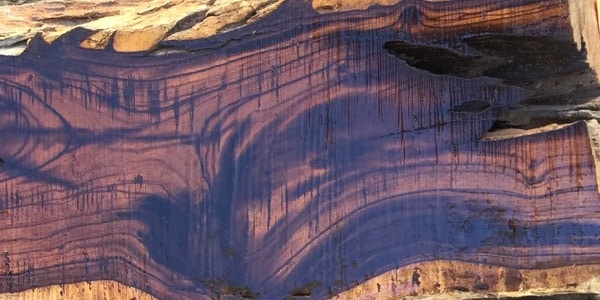
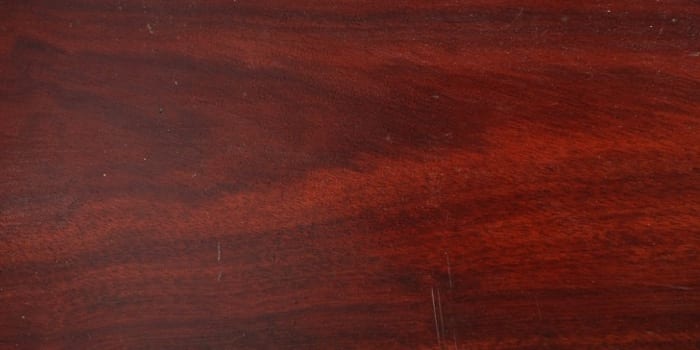
Bloodwood (Brosimum rubescens), also known as Satine, is a South American hardwood that keeps growing in popularity in the US. Its deep red color is the big draw, and unlike many red woods, it doesn't fade or darken as much over time.The heartwood is mostly red, sometimes with patches of orange or pale yellow, and it has a satiny, highly chatoyant finish. It's hard and dense, so sharp tools help, but the results are worth it.Its density makes it ideal for electric guitar fretboards and acoustic backs and sides, and turners love its looks.Bloodwood is also popular for knife and gun handles, inlay and trim. It offers striking color at a very reasonable price for an imported exotic, though exceptional boards command a premium. Its close relative, Snakewood, is in the same genus.
carving, furniture, inlay, knife handles, lutherie, trim, turnings