
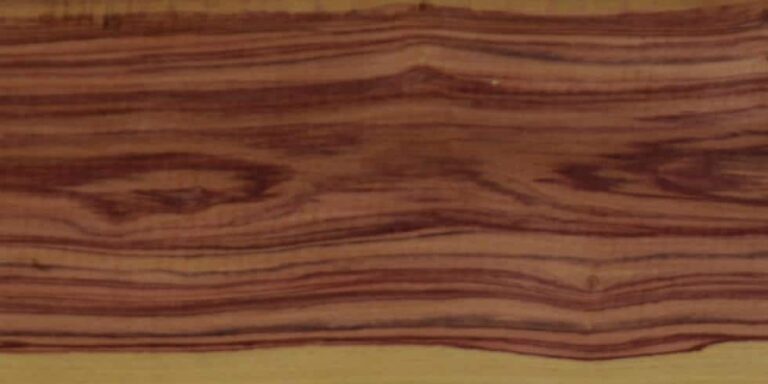
Tulipwood (Dalbergia decipularis), also called Brazilian Tulipwood or Pinkwood, is one of the most coveted and seldom-seen rosewoods. It grows in northeastern Brazil and is unrelated to Tulip Poplar, which is sometimes sold under the same name.The heartwood is cream to salmon, striped with reds, violets, purples, pinks and rose, and the sapwood is pale yellow. It has a mild, sweet scent when cut. The color slowly fades with exposure to light, so a UV-resistant finish helps preserve it.The grain is mostly straight, sometimes wavy or irregular. It's dense and oily, which makes it challenging to work and glue, so keep tools sharp and wipe joints with a solvent first. Despite its open grain, it sands very smooth and polishes to a pleasing luster.The trees are small, so long, wide boards are rare and command a premium, and most Tulipwood comes in craft-sized pieces. It's been a favorite for fine furniture inlay and banding for centuries, and it's used for boxes, turnings, pool cues, bows and instrument parts. For a lower-priced alternative, see Canarywood.
bandings, bows, boxmaking, inlay, musical Instruments, pool cues, specialty items, turnings, veneer
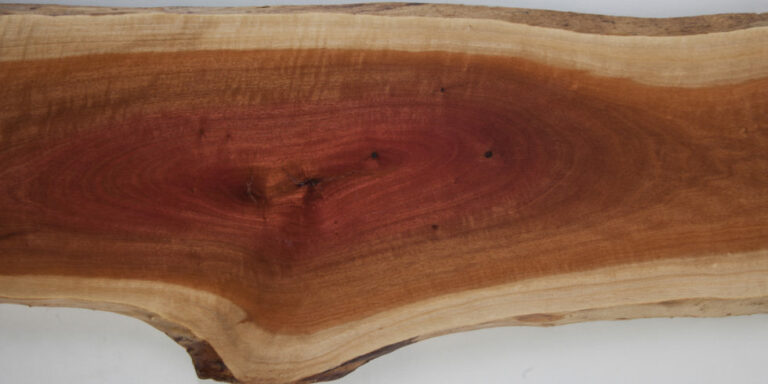
Pink Ivory (Berchemia zeyheri), also known as Red Ivory, is one of the rarest and most sought-after woods in the world. It's native to southern Africa, where it's traditionally associated with Zulu royalty, and many guitar makers see it as a “holy grail” tonewood.It's prized for its dazzling pink to red color, which ranges from pale pink to deep red, and occasional striking figure such as curl or chatoyant stripes. The texture is fine and even, with a lovely natural luster.It's very hard and dense, popular with carvers and turners, but it can be difficult to work and dulls blades. It turns beautifully and polishes to a glassy finish, and a finish with UV protection helps preserve its color. The trees are small, rarely much over 35 feet tall with trunks around a foot across, and harvesting in South Africa is limited by permit.As a result, Pink Ivory is mostly available in small, craft-sized pieces. It's used for turnings, knife handles, chess pieces, pool cues, pens, inlay and instrument parts. For another bright red wood, see Bloodwood.
chess pieces, inlay, knife handles, musical Instruments, pool cues, specialty items, turnings, veneer
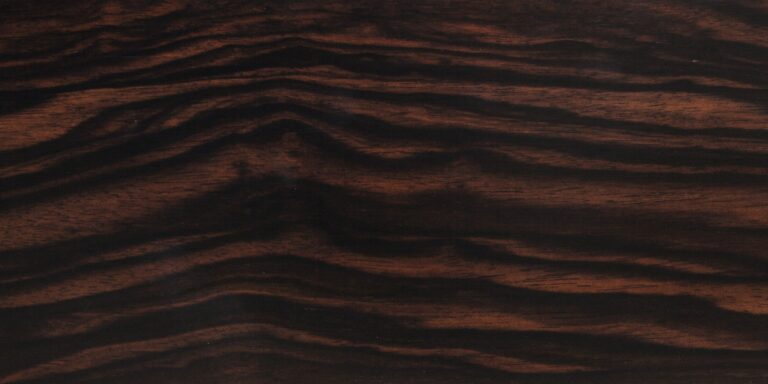
Macassar Ebony (Diospyros celebica) comes from the Indonesian island of Sulawesi and is one of Southeast Asia's best-known exotics. It's one of our favorites, with a classic striped look that has been prized for luxury furniture since the Art Deco era.Deep brown dominates, with stripes that can include green, yellow, burgundy, red, orange and even peach in the best pieces. Stripes are usually broad and bold, often twisting and overlapping, and boards with fine, tight, even striping are rarer and more desirable. The sapwood ranges from dull tan to light golden brown.Like other dense woods, it can be hard to work and hard on blades, and it's prone to checking, so store it carefully. It rewards the effort with a superb finish, polishing to a deep, glassy luster.Macassar Ebony is in constant demand for veneer and is prized by guitar makers for backs, sides and fretboards, where its density gives a bright, clear tone. It's also used for cabinetry, pool cues, turnings, boxes and inlay. See also Amara Ebony.
cabinetry, crafting, pool cues, specialty items, turnings, veneer