
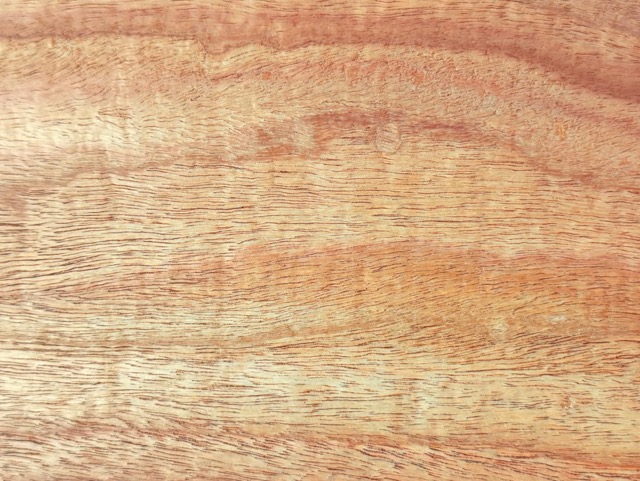
Red Canarywood, also called Tarara Colorada and sometimes sold as “Ruby,” is a rare Central American hardwood from the Platymiscium genus. That's the same group that includes Granadillo and Hormigo, both well known to instrument makers and furniture builders for their beauty and tone.It's valued for its rich red to salmon color and warm, golden shimmer. The grain is straight or slightly interlocked and the texture medium, with a natural luster that comes up beautifully under finish. Like many red woods, its color will slowly mellow with light exposure, so a finish with UV protection helps keep it bright.It machines cleanly, glues easily and is a pleasure to work, with a good balance of strength and workability. It turns well and sands to a smooth, lustrous surface.Despite the name, it's unrelated to the more common Canarywood (Centrolobium), though it offers a similar mix of color and usability in a much rarer package. It's well suited to turnings, boxes, cabinetry, instrument parts and specialty pieces where its color can take center stage.
cabinetry, specialty items, turnings
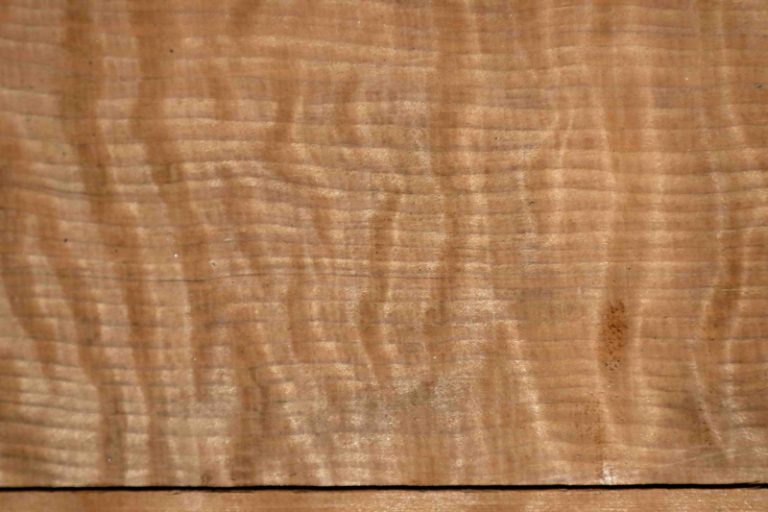
Curly Redwood (Sequoia sempervirens) is a rare, prized form of the iconic Coast Redwood, the tallest tree species on Earth, which grows along the coast of northern California and southern Oregon.Its swirling, intricate figure creates a shimmering, three-dimensional effect when properly finished, over a rich reddish-brown color. The figure comes from irregularities in the tree's growth, and much of today's curly stock is salvaged from old logs and stumps.Redwood is light and soft, so it's easy to work, but sand carefully to bring out the figure without tearing the soft grain. A clear finish makes the shimmer pop. It's naturally resistant to decay, though curly pieces are usually reserved for indoor showpieces.Curly Redwood is treasured by guitar makers for instrument tops, where it offers a warm tone and a striking look, and by woodworkers for fine furniture, cabinetry, boxes, decorative accents and specialty pieces. It's rare, and well-figured pieces are always in demand. For another figured top wood, see Quilted Maple.
cabinetry, crafting, lutherie, musical Instruments, specialty items
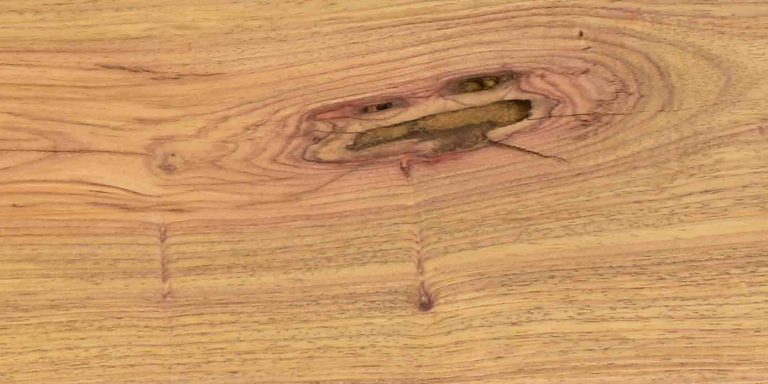
Kosso (Pterocarpus erinaceus), also sold as Senegal Rosewood in some markets, is a West African hardwood with gorgeous color and grain. It looks similar to Kiaat, another member of the Pterocarpus genus.The heartwood ranges through warm reddish-brown to deep red-purple tones, often with darker streaks and attractive figure, and it finishes to a rich luster. Like other Pterocarpus species, it's durable, stable and works well, turning and finishing nicely.Its beauty has made it heavily exploited for “Hongmu,” the traditional rosewood-style furniture popular in China, and it's now considered an endangered species. That demand has made legal supply very limited, and it's become one of the rarer woods we carry.Kosso suits boxes, cabinetry, inlay, knife handles, pens and specialty pieces where its color can shine. Our stock is limited, and we don't expect to be able to replace it once it's gone. For a similar look, see African Padauk and Kiaat.
boxmaking, cabinetry, inlay, knife handles, specialty items
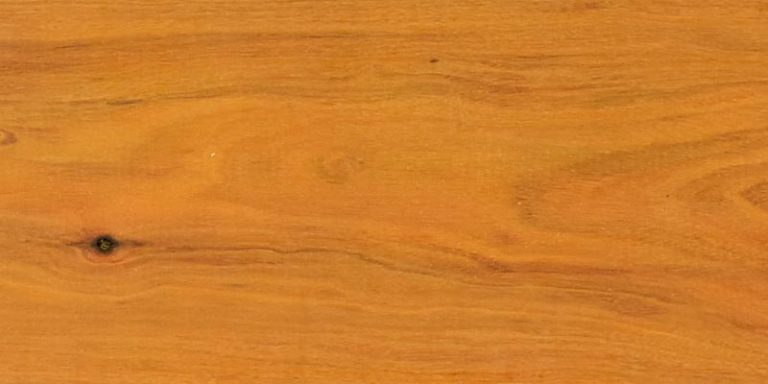
Chakte Viga (Caesalpinia platyloba) is a vibrant Central American wood that has been emerging from relative obscurity over the past decade or so. It's thought to be closely related to Pernambuco, the classic violin-bow wood, and shares some of its acoustic properties.The colors range from orange to golden brown, with gold, red and occasionally green accents, set against pale off-white to yellow sapwood. Like many orange woods, it deepens toward a richer reddish-brown over time. The grain is straight, sometimes interlocked, and the texture fine with excellent luster.It's dense and hard, but it works easily with sharp tools and finishes well, and a clear lacquer can bring out a shimmering, three-dimensional chatoyance. It turns beautifully, which makes it a favorite for pens, bowls and small turnings.We think it has real potential as a guitar tonewood and for fine furniture, and it's a great choice for turnings, inlay, boxes and accents. If you like its color, see also African Padauk and Canarywood.
fine furniture, furniture, inlay, turnings
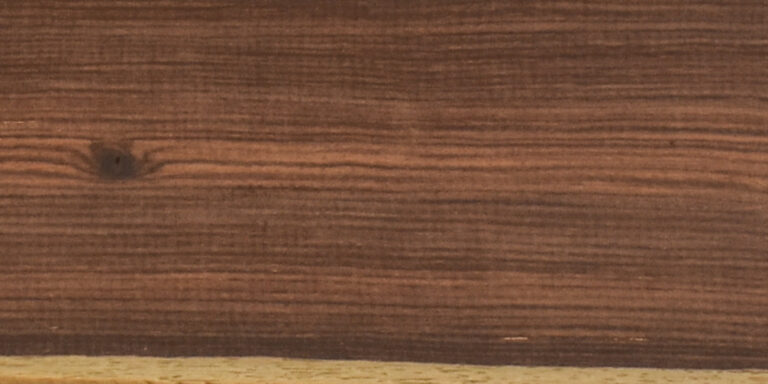
Amazon Rosewood (Dalbergia spruceana) is a true rosewood from the Brazilian Amazon. It has long been considered a good substitute for Brazilian Rosewood, but its looks and tone are good enough to stand on their own.It tends toward a darker reddish-brown than Brazilian Rosewood, often with darker streaks and occasional figure. It's noticeably heavier too: Amazon Rosewood will usually sink in water, while dry Brazilian Rosewood should float.Its density makes it challenging to work, and its oils can make gluing tricky, so wipe joints with a solvent first. It rewards the effort with a fine, lustrous polish. Like other true rosewoods, it's very durable and stable once dry, and it has the classic rosewood scent when cut.Amazon Rosewood is valued by guitar makers for backs, sides and fretboards, where it gives a rich, complex tone. It's also used for fine furniture, inlay, turnings, knife handles and veneer. See also East Indian Rosewood.
furniture, inlay, lutherie, turnings, veneer
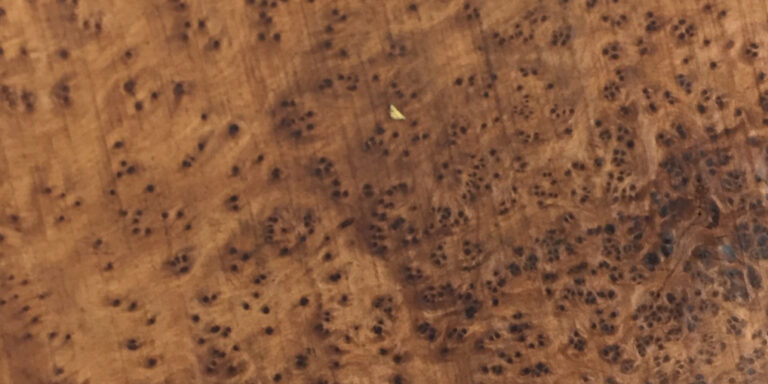
Thuya Burl (Tetraclinis articulata) comes from Morocco and is one of the most beautiful burls you can buy. The burl grows at the base of the tree, partly underground, and is carefully dug out by hand.It's a rich reddish-brown, with dense, swirling figure and clusters of tiny “eyes” that vary from block to block. It also has a distinctive, spicy scent similar to Western Red Cedar, which comes through every time you cut or sand it.The figure makes it prone to tear-out, so work it carefully with very sharp tools and light passes, and expect the occasional natural void or inclusion. It sands well and polishes to a deep, glowing finish, and many pieces need nothing more than oil or wax to show off their figure.Moroccan craftsmen in Essaouira have made fine boxes and inlaid work from Thuya for generations. Highly figured pieces make stunning knife handles, boxes, pens, inlay and other accent pieces. It's a premium wood and the price reflects that. For another prized burl, see Masur Birch.
boxmaking, inlay, specialty items
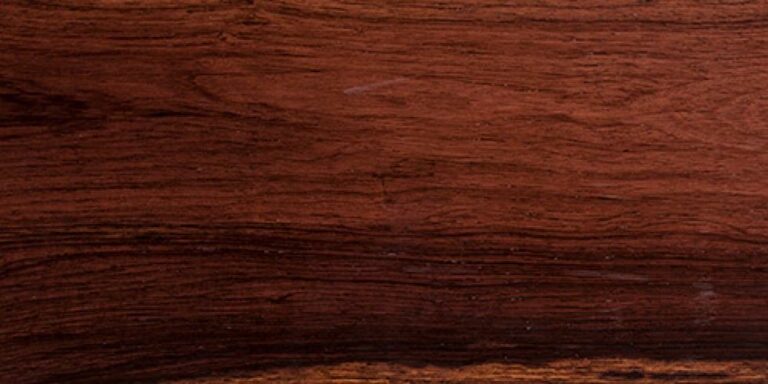
Nicaraguan Rosewood (Dalbergia tucurensis), also called Yucatan or Panama Rosewood, grows across Central America and southern Mexico. It's the lightest and softest of the true rosewoods, and its density can vary a lot by region.The heartwood ranges from pale yellow-brown and tan to light and dark browns, with clearly paler yellow sapwood. The grain is generally straight, sometimes wavy or interlocked, with a fine to medium texture and large, open pores.It's on the plainer side, though darker accents and occasional figure appear. Its color can deepen with age, and an oil finish brings out its warmth. It's surprisingly durable and less oily than other rosewoods, so it works, turns, glues and finishes very well, which makes it one of the friendliest rosewoods to use.It's used for furniture, turnings, knife handles, boxes and specialty pieces, and it's an affordable way to work with a true rosewood. For a more colorful option, see Cocobolo.
furniture, specialty items, turnings
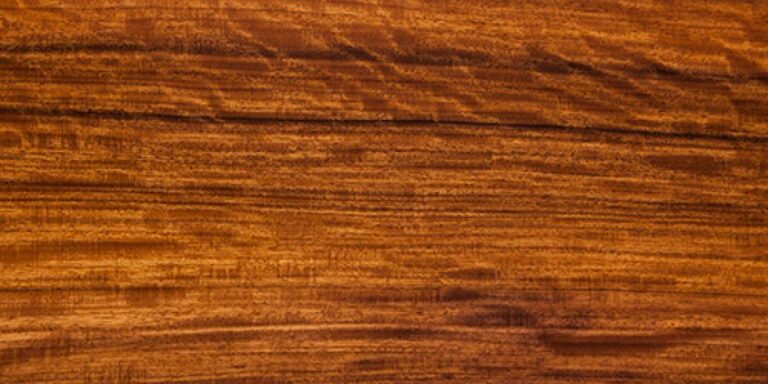
Santos Rosewood (Machaerium spp.) is more often called Pau Ferro, Bolivian Rosewood or Morado. It grows in Bolivia and Brazil, and it isn't a true rosewood, but its color and density are close, which earned it the name.It has a medium brown base with black streaks, sometimes with purple, tan and golden hues or an overall purplish tint. The grain is mostly straight with a fine to medium texture.Straight-grained boards are very easy to work, and it turns smoothly and finishes well. It's quite durable, though it can be attacked by insects, and its dust can irritate sensitive skin. A much denser wood, Brazilian Ironwood, is also sometimes sold as Pau Ferro, but most of what's available in the US is the lighter Bolivian type.Santos Rosewood is a popular Brazilian Rosewood substitute, especially for guitar fretboards, with a tight grain and a clear, focused tone that's a little brighter than rosewood. It's also used for furniture, cabinetry, flooring, knife handles, turnings and veneer.We separate Santos Rosewood from Morado, because we have two different sources of material that differ somewhat. The same genus, but this material is far more rustic than our Morado which is the quality, grain pattern and color you will likely be more familiar with.
cabinetry, flooring, furniture, specialty items, turnings, veneer
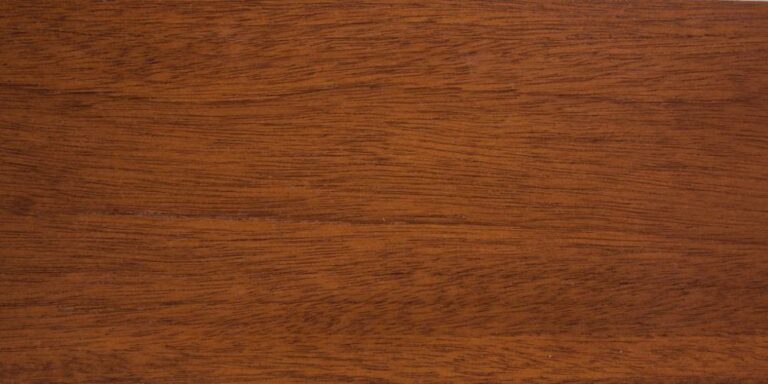
Genuine Mahogany (Swietenia macrophylla), also called Honduran, Brazilian or Big-leaf Mahogany, is the species most people mean when they say “mahogany.” It grows from Mexico to the Amazon and has long been an important wood throughout Latin America.The color ranges from pale pink to light and medium reddish-brown, deepening to a rich, warm red-brown with age, and it's renowned for its chatoyance. The grain is usually straight but can be interlocked, irregular or wavy, with a fine, even texture and a rich luster. Ribbon and fiddleback figure appear in some boards.It's famously easy to work: it cuts, planes, carves, glues and finishes beautifully, and it's very stable once dry. Wood from natural forests is generally considered more durable and stable than plantation-grown stock, which now makes up much of the supply.Genuine Mahogany is a classic for fine furniture, cabinetry, boats, guitars, carving and turnings. Tighter supply has given rise to substitutes such as Sapele and African Mahogany, but demand for the real thing remains strong.
boatbuilding, cabinetry, carving, furniture, turnings, veneer
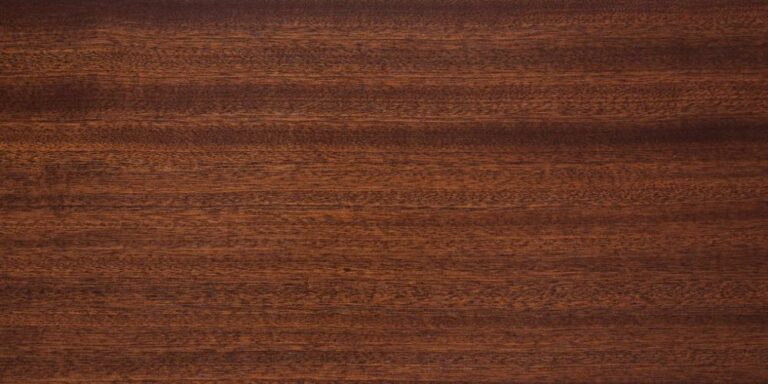
Sapele (Entandrophragma cylindricum) is an important African hardwood from the mahogany family, grown across tropical West and Central Africa. It's one of the most popular substitutes for Genuine Mahogany, at a significantly lower price.Its color ranges from light golden brown to darker reddish or pinkish-brown, darkening with age. It's moderately durable and stable, with a beautiful natural luster and a faint cedar-like scent when cut.Sapele is famous for its figure, especially the ribbon stripe on quartersawn boards, and you'll also find pommele, quilted, mottled, waterfall, beeswing and fiddleback. Highly figured boards can command high prices. It works, turns and finishes beautifully, though interlocked grain can tear out when planed, so take light final passes.The trees grow very large, so wide, long boards are readily available. Sapele is used for furniture, cabinetry, doors, windows, guitar backs, sides and necks, boatbuilding, flooring, turnings and veneer. For a close cousin, see Sipo.
boatbuilding, cabinetry, flooring, furniture, specialty items, turnings, utility lumber, veneer
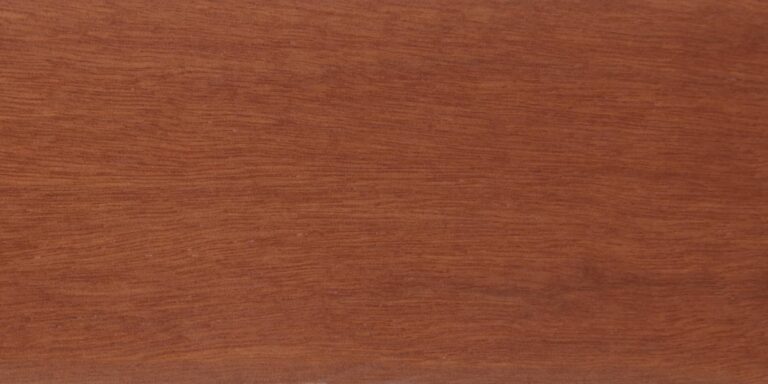
Makore (Tieghemella heckelii), sometimes called African Cherry or Cherry Mahogany, is a beautiful hardwood from the rainforests of West Africa. It's strong and durable for its moderate density, it's often used as a mahogany substitute, and it has served many roles in its native Africa for centuries.The heartwood ranges from pink to light and medium reddish-brown, with clearly paler yellow sapwood. Quartersawn boards often show striped, mottled or even beeswing figure, with a fine, even texture and a lovely luster.It's usually straight-grained and easy to work, though some boards are wavy or interlocked, and it turns well. Its silica content can dull blades, so carbide tools help, but it gives the wood a fine luster and causes no trouble with gluing or finishing. The fine dust can irritate, so use good extraction.The trees grow very tall, so long, wide and thick boards are available. Makore is used for fine furniture, cabinetry, boatbuilding, flooring, turnings and veneer, and its color makes it a handsome alternative to Cherry.
boatbuilding, cabinetry, flooring, furniture, specialty items, turnings, utility lumber, veneer
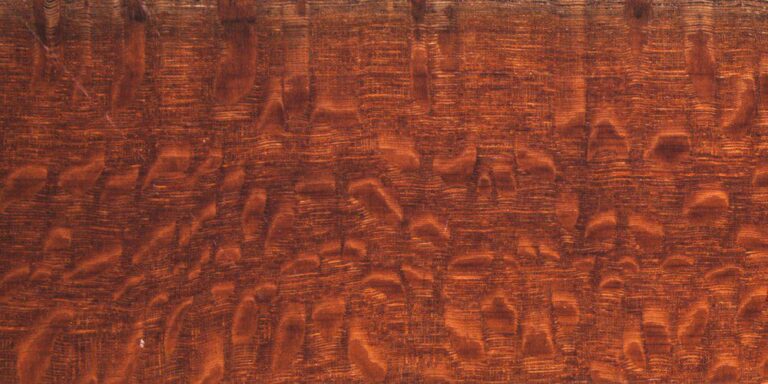
Leopardwood (Roupala brasiliensis), also called Brazilian Lacewood, is a South American hardwood named for the tightly grouped flecks that cover its surface.It's almost always quartersawn to show off this leopard-spot figure, which comes from the wood's large rays. It's medium to dark reddish-brown, and before sanding, the raised flecks give the surface a real three-dimensional look. Its color deepens with age, and a clear finish makes the flecks stand out.It's fairly hard to work, and its uneven texture can tear out when planed, so take light passes with sharp blades or use a drum sander for final surfacing. It glues and finishes well once surfaced, and it turns nicely.Leopardwood is often confused with Lacewood, which has a similar pattern but is much lighter and less dense. Its striking figure makes it a favorite for fine furniture, cabinetry, boxes, guitar backs, turnings and veneer, where a little goes a long way as an accent. For a similar flecked look, see Silky Oak.
cabinetry, fine furniture, turnings, veneer
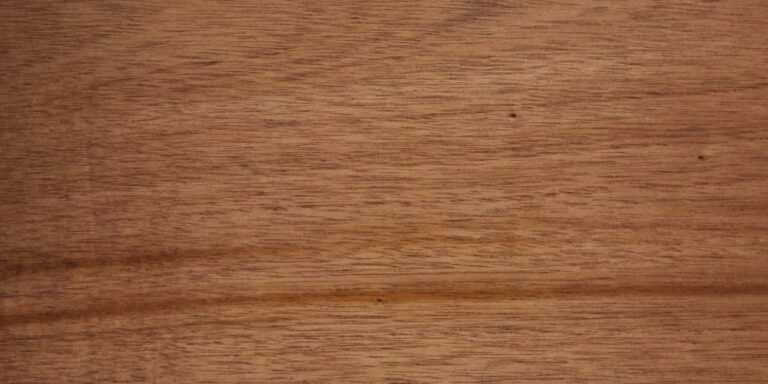
African Mahogany (Khaya spp.) covers four closely related species and is one of Africa's most commercially important woods. It grows across tropical West and Central Africa and is a strong, tough, durable wood with many of the same qualities as Genuine Mahogany.Depending on origin and species, it ranges from pale pink or muted orange to darker reddish or golden brown, sometimes with darker stripes, and it deepens in color over time. Ribbon, wavy and mottled figure and varying chatoyance can make it very attractive.The grain is straight or interlocked, with a medium to coarse texture. It works, turns and finishes easily, though interlocked boards can tear out when planed, so take light passes. It glues well and takes stain evenly.Its popularity as a mahogany substitute has led to plantations in Latin America as well as Africa. It's used for fine furniture, cabinetry, boatbuilding, guitar necks and bodies, turnings, millwork and veneer. For a close alternative, see Sapele.
boatbuilding, furniture, lutherie, turnings, veneer
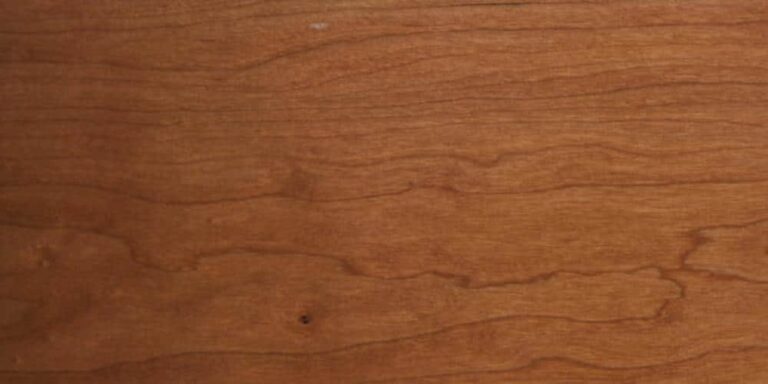
Black Cherry (Prunus serotina) is one of America's most important hardwoods and a long-time favorite for fine furniture. It grows across the eastern United States, with some of the finest timber coming from Pennsylvania and New York.Freshly cut, it's tan to light brown with a pink or red tint, and it ages to the rich reddish-brown (russet) that stains on other woods try to imitate. That color change happens quickly with light exposure. The sapwood is pale yellow, and small dark gum flecks and pith marks are part of its natural character.The grain is straight to irregular, the texture fine and even, and the density moderate. It's one of the most cooperative, user-friendly hardwoods around: easy to work, strong for its weight, stable and durable. It can blotch when stained, but with color like this there's rarely a reason to stain it. Go slowly with high-speed tools, as it can burn.Cherry is used for fine furniture, cabinetry, millwork, flooring, turnings and veneer, and occasionally for guitar necks and bodies. For figured stock, see Curly Cherry.
cabinetry, fine furniture, flooring, millwork, specialty items, turnings, veneer
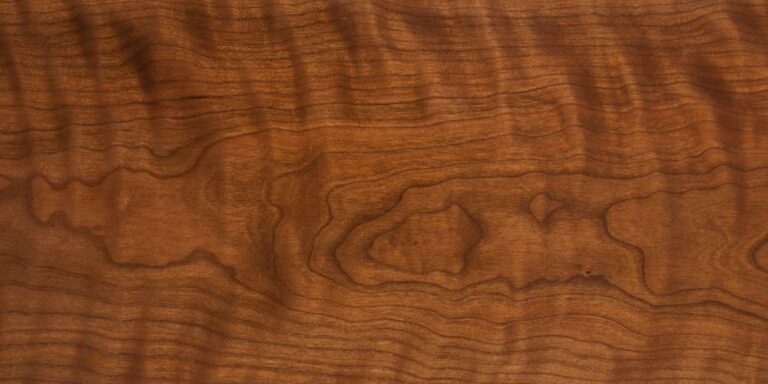
Curly Black Cherry (Prunus serotina) is the figured version of American Cherry, with bold, shimmering curl running across the grain. The best boards are quite dramatic, with the stripes appearing to move as you tilt the piece in the light.Freshly cut, it's tan to light brown with a pink or red tint, and it ages to a rich reddish-brown that deepens over the years. The grain is straight to irregular, the texture fine, and the density moderate.It's one of the most cooperative hardwoods to work, and it's strong for its weight, stable and durable. Take light passes with a sharp blade to avoid tear-out in the figure, and finish with an oil or clear finish to make the curl glow. It can blotch if stained, but the natural color and figure are the reason to buy it.Curly Cherry is the most sought-after form of this classic American wood, ideal for fine furniture, cabinetry, boxes, drawer fronts and instrument parts where the figure can show. Its stability has also earned it a place in guitar necks and bodies. See also plain Black Cherry.
cabinetry, fine furniture, flooring, millwork, specialty items, turnings, veneer
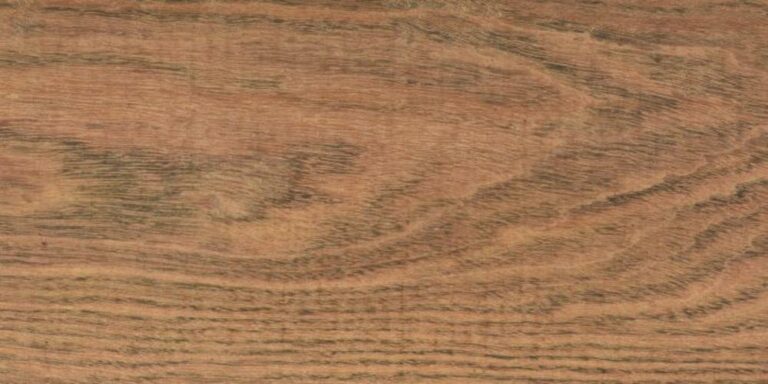
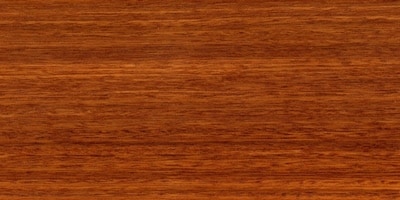
Andiroba (Carapa guianensis), also called Crabwood, grows across Central and South America, where it's used as a mahogany substitute and a general carpentry wood. It's a member of the mahogany family and is durable in use.The wood is a pale reddish-brown that darkens slightly as it dries and continues to deepen with exposure to light. The grain is usually straight, though it can be wavy or interlocked, and the texture is fine with a good natural luster. Most boards are on the plain side, but quartersawn pieces can show a ribbon figure much like Sapele.It's generally easy to work and turns, glues and finishes well. Andiroba isn't often seen in the US, but it's a good choice for furniture, cabinetry, flooring, turnings and veneer, and it has a history in boatbuilding.
boatbuilding, cabinetry, flooring, furniture, turnings, veneer