
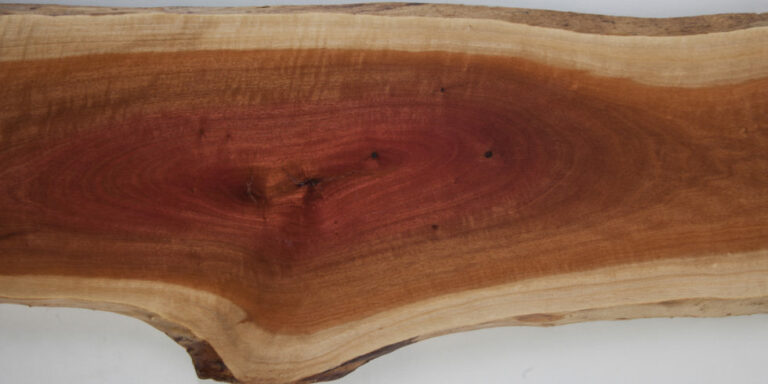
Pink Ivory (Berchemia zeyheri), also known as Red Ivory, is one of the rarest and most sought-after woods in the world. It's native to southern Africa, where it's traditionally associated with Zulu royalty, and many guitar makers see it as a “holy grail” tonewood.It's prized for its dazzling pink to red color, which ranges from pale pink to deep red, and occasional striking figure such as curl or chatoyant stripes. The texture is fine and even, with a lovely natural luster.It's very hard and dense, popular with carvers and turners, but it can be difficult to work and dulls blades. It turns beautifully and polishes to a glassy finish, and a finish with UV protection helps preserve its color. The trees are small, rarely much over 35 feet tall with trunks around a foot across, and harvesting in South Africa is limited by permit.As a result, Pink Ivory is mostly available in small, craft-sized pieces. It's used for turnings, knife handles, chess pieces, pool cues, pens, inlay and instrument parts. For another bright red wood, see Bloodwood.
chess pieces, inlay, knife handles, musical Instruments, pool cues, specialty items, turnings, veneer
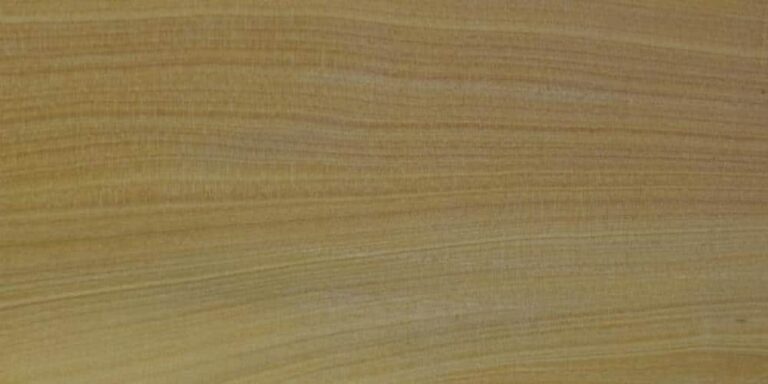
Boxwood (Buxus macowanii), also known as Cape Boxwood or East London Boxwood, is native to the Eastern Cape of South Africa. It's a close cousin of the original European boxwood (Buxus sempervirens) and shares its most prized quality: a dense, ultra-fine texture that holds the crispest detail.The wood is a pale, creamy yellow with almost no visible grain, so nothing competes with the carving or turning itself. It cuts cleanly with sharp tools, turns superbly and finishes to a smooth, silky sheen without much more than fine sanding and a light oil or wax.The trees are small, rarely more than 20 feet tall with trunks of about 6 inches, and the dense wood is prone to cracking as it dries. That limits supply to small, craft-sized pieces. Ours comes from South Africa and has been slowly air-dried over many years for stability. Be wary of other pale, dense woods sold as boxwood.Boxwood has long been the wood of choice for fine carving, engraving blocks, chess pieces, rulers and instrument parts, and it's a favorite with turners for small, detailed work. For a more affordable alternative, see Castello Boxwood.
carving, chess pieces, handles, musical Instruments, specialty items, turnings