
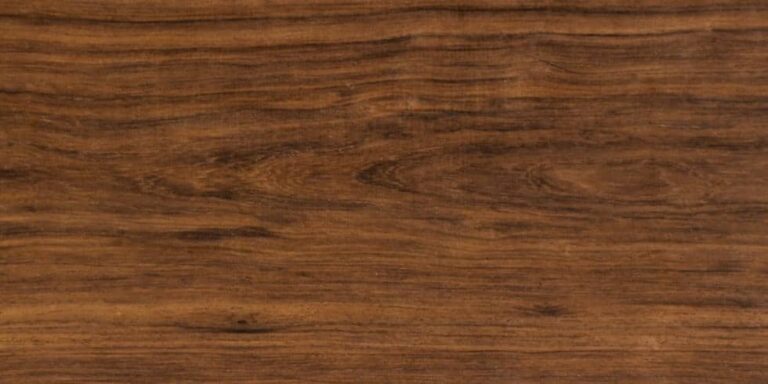
English Walnut (Juglans regia), also called European or Persian Walnut, is one of the world's classic furniture woods. Despite the name, it's native to parts of Europe and Central Asia, and it's the same tree that produces the common walnuts sold in stores.The heartwood ranges from warm honey brown to rich chocolate, often with subtle grey, olive or purple undertones. The grain is typically straight, but curly, crotch and burl figure can be spectacular, and burl veneer from this species has graced fine furniture and car dashboards for generations.Compared with American Black Walnut, it's usually lighter and warmer, with a slightly finer texture and softer contrast between heartwood and sapwood. It machines beautifully, turns well and finishes very smoothly, developing a deep luster under oil. It's not as hard as many tropical woods, but it offers an excellent balance of stability, workability and durability.It's a favorite for fine cabinetry, heirloom furniture, gun stocks, paneling, carving, boxes and inlay. For craftsmen who value elegance over brute hardness, it's hard to beat.
boxmaking, cabinetry, inlay, interior panelling, joinery, specialty items, trim
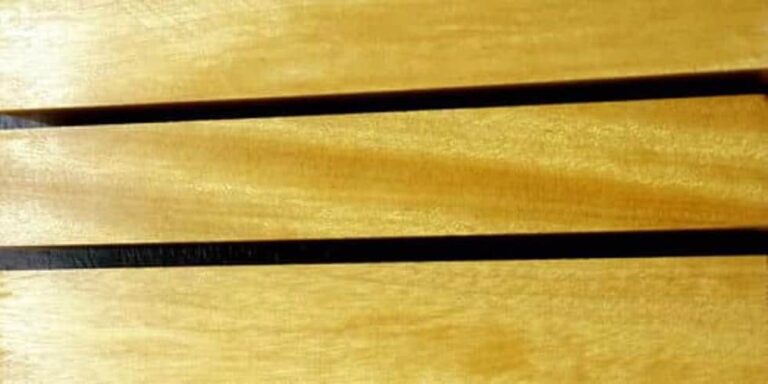
Yellowheart (Euxylophora paraensis), also called Pau Amarelo or Brazilian Satinwood, was once one of the most popular yellow woods around. True Yellowheart has now become almost impossible to find.The tree grows only in a small part of the Brazilian Amazon, mostly in Pará and Maranhão, where it occurs naturally at low densities. Decades of selective logging, along with forest clearing for cattle pasture and farming, are thought to have cut its wild population by half or more over the past 60 years. In 2014 Brazil added it to its official list of threatened species, which bans cutting, transporting and selling wild trees, and supply to the US has all but dried up. Much of the “Yellowheart” sold today is actually a different species.The color ranges from pale yellow to bright yellow and gold, and premium boards show a satiny, shimmering figure. It's fine-textured, durable and easy to work, and it finishes beautifully.We still have a small amount of legacy stock, bought before the ban, and once it's gone we won't be able to replace it. For the same golden look in a wood that's readily available, see Yellow Rosa or East Indian Satinwood.
boatbuilding, cabinetry, carving, flooring, furniture, handles, inlay, musical Instruments, trim, turnings, veneer
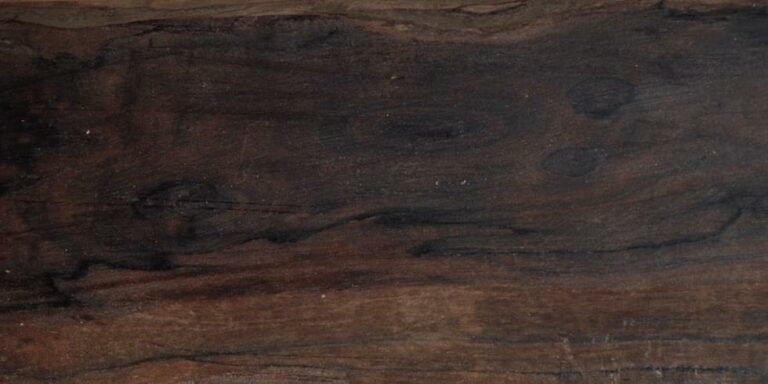
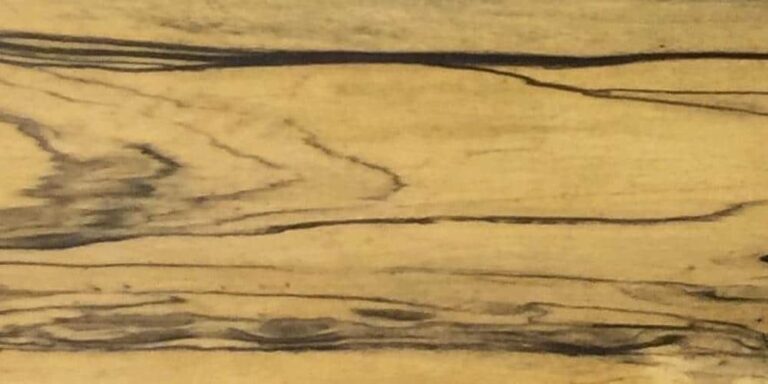
Ziricote (Cordia dodecandra) is one of the most striking exotic woods in the world, famous for its “landscape” or “spiderweb” grain. It grows in southern Mexico and parts of Central America.The color ranges from medium to dark brown, sometimes with a green or purple tint, with irregular black growth rings weaving through it. The sapwood is a dull off-white to pale yellow, and boards with sapwood left on can make for dramatic contrast.Although fairly dense, its mostly straight grain and fine texture make it cooperative to work. It cuts, turns, glues and finishes smoothly. It can be prone to end checking and surface cracks as it dries, so seal ends and store it carefully.Ziricote is a close relative of Bocote, and its dramatic figure has given it something of an elite status among exotic wood enthusiasts. It's prized by guitar makers as a visually stunning tonewood, with a bright, rosewood-like voice. Supply is limited and prices are high. It's also used for fine furniture, cabinetry, gun stocks, turnings, boxes and veneer.
cabinetry, flooring, furniture, gun stocks, joinery, lutherie, musical Instruments, specialty items, trim, turnings, veneer
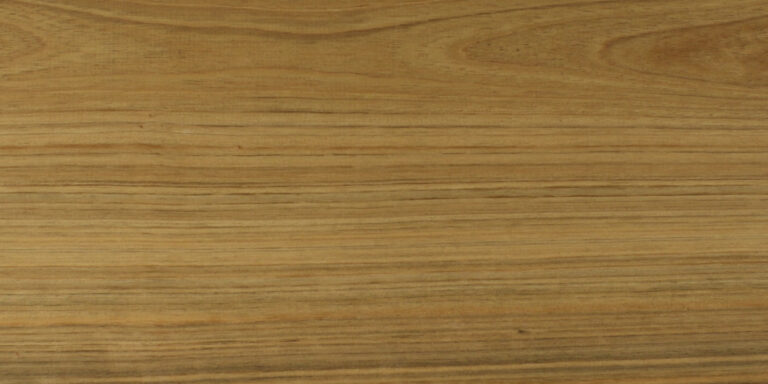
Shedua (Guibourtia ehie), also called Ovangkol, is a West African hardwood and a cousin of Bubinga, though it looks quite different. It's a popular African tonewood.The heartwood ranges from light to medium yellow to light orange or reddish-brown, usually with darker brown or black stripes, and the sapwood is pale yellow. Tiger stripe, fiddleback and mottled figure turn up on occasion, and boards can vary so much they look like different species.The grain can be straight, wavy or interlocked, with a medium texture and nice luster. It's tough and durable and generally works well, though its silica can gum up blades, and interlocked boards can tear out. It turns, glues and finishes well.Guitar makers use it as a rosewood alternative for backs and sides, with a similar warm tone, and some denser pieces are used for fretboards. It's also used for electric guitar bodies, furniture, cabinetry, flooring, trim, turnings and veneer.
cabinetry, flooring, furniture, trim, turnings, veneer
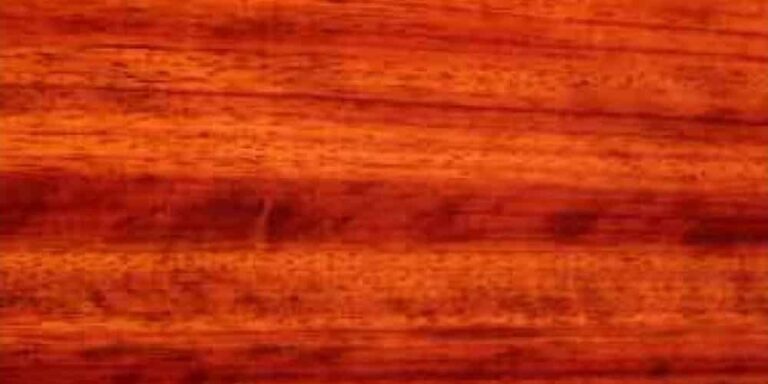
African Padauk (Pterocarpus soyauxii) is a strong, very stable hardwood from Central and West Africa known for its bold color, and it's a reasonably priced exotic.Freshly cut, it's a vivid orange-red, deepening over time to a robust reddish-brown. Colors can range from bright orange to muted burgundy, with grain lines in brick red or purple. The best boards have long, straight grain with ribbon figure and deep chatoyance. A finish with UV protection helps keep the color bright.The grain is mostly straight, sometimes interlocked, with large pores and a texture similar to African Mahogany. It works and finishes very well, though its fine red dust gets everywhere and can irritate, so use good extraction. The trees grow over 100 feet tall, so long, wide boards are available.Padauk is durable and resistant to insects and termites, and it's been used outdoors in Africa for centuries. It's used for furniture, flooring, trim, handles, turnings, marimba and xylophone bars, and accents. For a related wood, see Kiaat.
flooring, furniture, handles, specialty items, trim, turnings, utility lumber, veneer
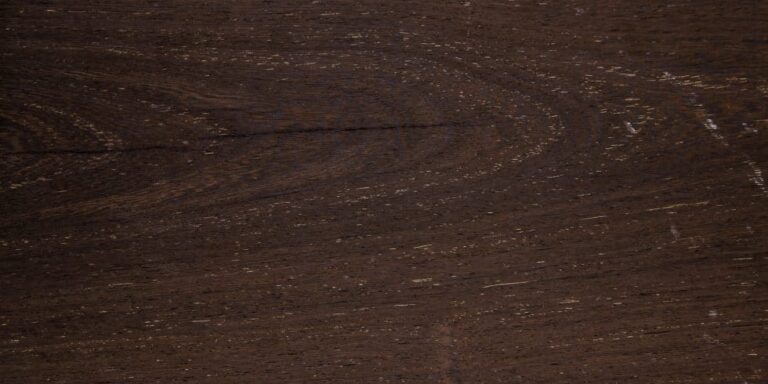
Panga Panga (Millettia stuhlmannii) is an East African hardwood from Mozambique and neighboring countries, and a close cousin of Wenge. The two share a large-pored, coarse texture and some of the same working challenges.It's usually a little lighter than Wenge, with heartwood from medium to dark brown and dark brown to black streaks. Darker boards are easily mistaken for Wenge and can turn almost black with age. Quartersawn boards show a striking, even striped look.It's hard, heavy, durable and stable, and it machines well with sharp tools, though the coarse grain benefits from a filler for a smooth finish. Like Wenge, it splinters easily, and the splinters can become inflamed, so wear gloves and take care when handling it.Panga Panga is better known internationally than in the US, and it's a popular, premium choice for parquet flooring in the UK and Europe. It's also used for fine furniture, paneling, stair treads, trim, turnings and veneer. It offers Wenge's dramatic look with a little more warmth.
fine furniture, flooring, paneling, specialty items, trim, turnings, veneer
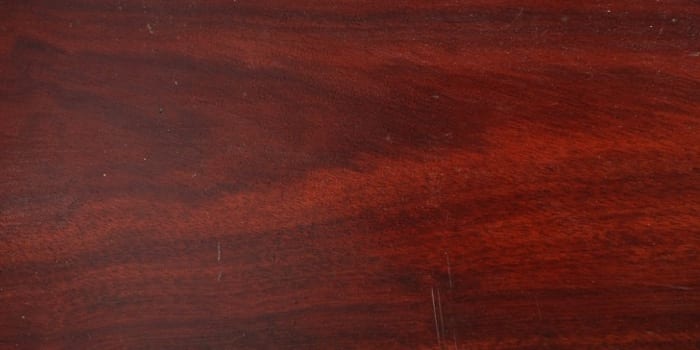
Bloodwood (Brosimum rubescens), also known as Satine, is a South American hardwood that keeps growing in popularity in the US. Its deep red color is the big draw, and unlike many red woods, it doesn't fade or darken as much over time.The heartwood is mostly red, sometimes with patches of orange or pale yellow, and it has a satiny, highly chatoyant finish. It's hard and dense, so sharp tools help, but the results are worth it.Its density makes it ideal for electric guitar fretboards and acoustic backs and sides, and turners love its looks.Bloodwood is also popular for knife and gun handles, inlay and trim. It offers striking color at a very reasonable price for an imported exotic, though exceptional boards command a premium. Its close relative, Snakewood, is in the same genus.
carving, furniture, inlay, knife handles, lutherie, trim, turnings